

Quick Answer: Learning how to brief a web design agency comes down to writing down four things: the business outcome you want, who decides, what content exists today, and your real budget range. PMI’s research ties 47% of failed projects to inaccurate requirements, and a written brief is the cheapest fix available.
What is a web design brief?
A web design brief is a short written document that tells an agency what you want the site to do, who it’s for, what already exists, and what you can spend. It’s the reference everyone returns to when a decision gets contested. Write it before you brief a web design agency, not during the kickoff call.
What should you include when you brief a web design agency?
Eight things, and none of them are color palettes. The Standish Group’s CHAOS research has ranked clear requirements and user involvement among the top drivers of project success since 1994, while incomplete requirements sit at the top of the failure list. Your brief is where those requirements live.
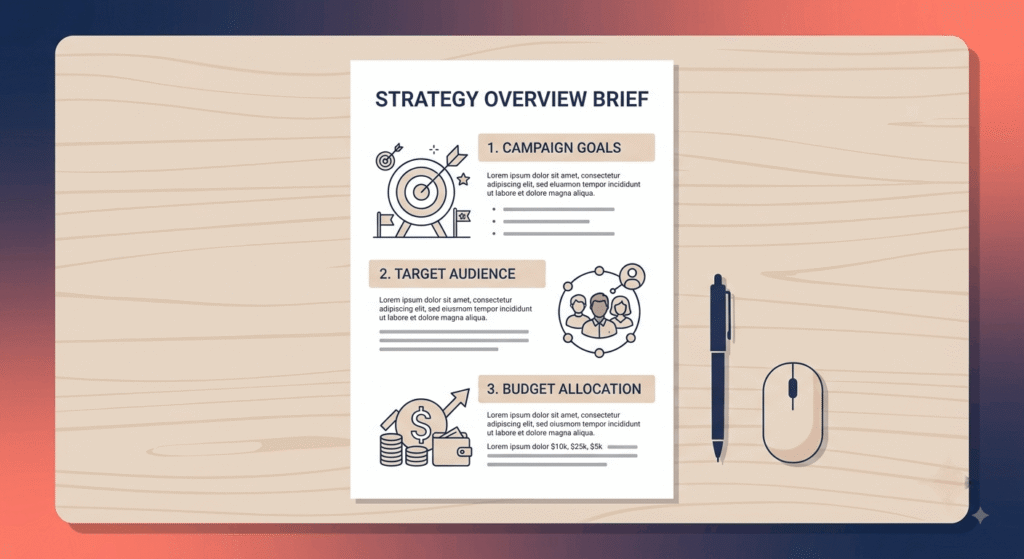
- The business outcome, written as a number. “Book 40 demos a month” beats “look more professional.”
- Your audience, described in a sentence per segment if you serve more than one.
- The single person who gives final approval, named.
- Current performance: traffic, conversion rate, and the pages that already rank.
- Content status: what exists, what needs writing, and who writes it.
- Must-have integrations, from CRM to payments to booking.
- Budget range and launch date, both real ones.
- What is out of scope, so nobody assumes it’s included.
Item three does more work than it looks like. CHAOS 2020 data puts only 31% of projects in the successful column, with 50% challenged and 19% cancelled outright. Most advice on how to brief a web design agency opens with mood boards and reference sites. Those help, but they come after the eight items above.
Website goals, stated as numbers
Vague website goals produce vague quotes. Pull twelve months of sessions and conversions from Google Analytics, then export your top-performing URLs from Google Search Console so the agency knows which pages carry traffic today.
That second export matters more than founders expect. If those URLs disappear in a redesign without redirects, rankings drop after launch. Say in the brief whether search performance must be preserved. Agencies that skip it will price the project lower and cost you more.
Content strategy and who writes the copy
Content is the most common reason website projects stall. Elementor’s 2026 analysis of build timelines named unprepared content and undefined scope as the two biggest causes of delay, both of which land before anyone writes code.
So be honest in the brief. List every page, mark it as ready, needs editing, or missing, and put a name and a date against each one. If your content strategy depends on the agency writing copy, say so and expect that line item in the quote. Founders who promise to “send the text next week” are usually the reason a launch slips a month.
How do you create a brief that gets comparable quotes?
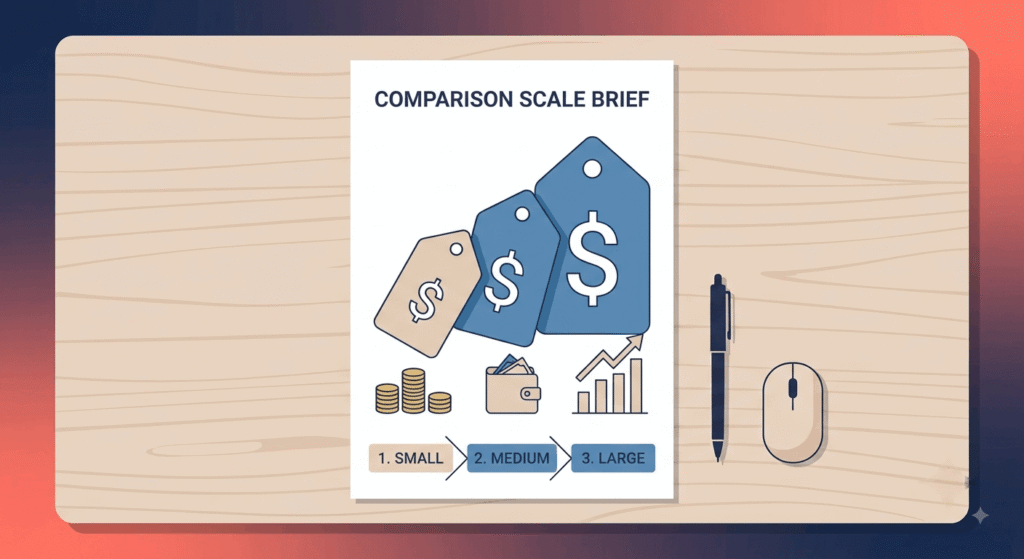
Send the same document to everyone. That’s the part of how to brief a web design agency that founders skip: US agency quotes for a custom small-business site commonly range from about $3,000 to $30,000, and much of that spread comes from agencies pricing different assumed scopes rather than meaningfully different quality.
Then ask each agency the same follow-up questions. What is excluded? What discovery happens before design? Who owns the source files and accounts after final payment? A studio that responds with clarifying questions is reading your brief. One that responds with a template proposal probably isn’t.
Keep it to two or three pages. Nobody reads a 30-page RFP carefully, and length isn’t rigor.
What a startup website brief needs that an enterprise RFP doesn’t
A startup website brief should state what is still uncertain. Pricing may change. The positioning may shift after the next funding round. Say that out loud, because an agency that knows the messaging is unsettled will build flexible page templates instead of hard-coded layouts.
Founders shipping a first product should also flag it. Website work that runs alongside MVP development needs a different sequence than a redesign of a mature site, and the brief is where you say which one this is.
What does website project planning look like after you send the brief?
The brief becomes the scope of work. Good agencies turn it into a written statement listing pages, features, revision rounds, and dates, then hold changes to a formal request process. That matters: PMI’s 2018 Pulse of the Profession found 52% of projects experienced scope creep, up from 43% five years earlier.
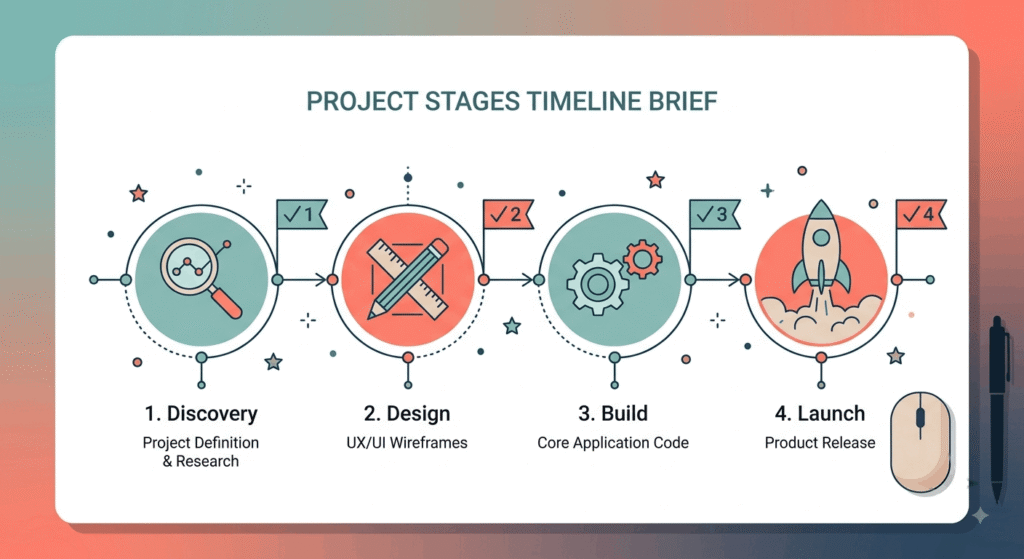
Expect a web design consultation first, where the agency stress-tests your assumptions. After that, most teams work in Figma so you can comment directly on designs instead of emailing screenshots. Ask for a performance target too, measured in PageSpeed Insights field data rather than a vague promise that the site will be fast.
Set feedback windows in the plan. Two business days per review round, consolidated through your named approver, keeps UI/UX design work moving. Ask what happens in the first 30 days after launch, and who fixes what.
Frequently asked questions
1. What should a web design brief include?
Business goals with numbers, audience description, current site performance, content status, required integrations, budget range, launch date, and out-of-scope items. Design preferences come last. Requirements and approval authority affect the quote far more than color choices or font preferences do.
2. How long should a website brief be?
Two to three pages is enough for most founders. Longer documents get skimmed, and detail without decisions doesn’t help anyone price the work. If a section runs long, move the raw material into an appendix and keep the brief itself scannable.
3. What is the difference between a brief and a scope of work?
A brief is what you want and why, written by you before agencies quote. A scope of work is what will be built, written by the agency after you select one. The brief informs the quote; the scope of work governs the contract.
4. How do I set a budget before I know what a website costs?
Give a range instead of a number. Useful anchors for a US agency build:
- Roughly $3,000 to $10,000 for a straightforward custom site.
- $10,000 to $30,000 once ecommerce, integrations, or heavy content are involved.
- 4 to 8 weeks for a smaller build, 8 to 16 for a larger one.
- Ongoing maintenance, typically $50 to $300 a month.
5. What happens in a web design consultation?
The agency asks what the site needs to accomplish and what has failed before. Bring your brief. A strong consultation surfaces tradeoffs and disagreements early, which is exactly when they’re cheap to resolve. Ask what the agency would do differently from your brief, and why.
Conclusion
Knowing how to brief a web design agency isn’t about writing a perfect document. It’s about deciding a few things in advance: what success looks like as a number, who signs off, and what content actually exists. Spend an afternoon on those, send the same brief to every agency you’re considering, and compare what comes back.