


Quick Answer Box: AI business transformation is the process of deeply integrating artificial intelligence tools and strategies across an organization to radically redefine how businesses operate and deliver value. This transformation goes beyond conventional digital upgrades by using AI to automate processes, boost productivity, and revolutionize customer experience, setting new standards for digital innovation.
What is AI Business Transformation?
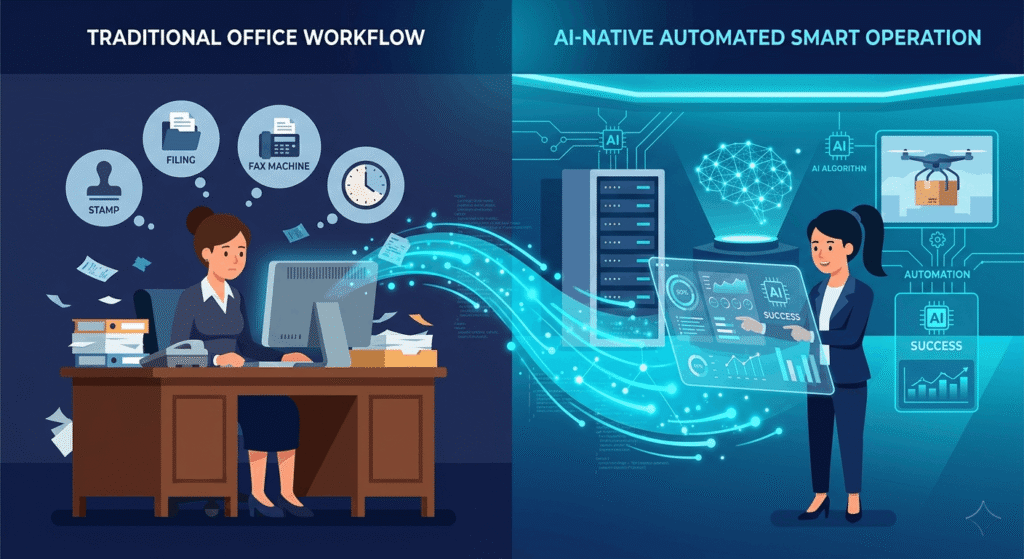
AI business transformation is the strategic integration of artificial intelligence into every facet of a company’s operations. This approach far surpasses traditional digital upgrades like shifting to the cloud or simple task automation. Instead, AI business transformation involves reengineering organizational processes, structures, and customer value delivery by embedding machine learning, automation, and generative AI directly into core workflows.
Unlike merely digitizing manual processes, AI business transformation enables companies to create AI-native operations. Intelligent systems can learn, adapt, and continuously improve, autonomously handling up to 80% of workflow volume. For organizations wanting to lead in digital innovation, this approach is essential for driving lasting business value and competitive advantage.
What are the Pillars of Successful AI Business Transformation?
Successful AI adoption relies on three main pillars: people, process, and platforms. These pillars ensure technology investments generate real business value rather than stand-alone technical projects.
People
Effective transformation starts with leadership commitment and robust governance. Executive champions define the vision and build cross-functional collaboration while fostering a culture that embraces AI and digital change. Upskilling existing employees is critical, encompassing online training, professional certifications, and executive programs from respected institutions such as Imperial College London, Kellogg School of Management, and tailored internal initiatives.
Process
AI adoption demands fresh workflows. Organizations must redesign operations to embed AI at the core, not just as an add-on. Change management and clear communication support this evolution, while continuous training helps teams adapt and utilize new AI tools for business effectively.
Platforms
Data infrastructure and smart platforms are the foundation for scalable AI implementation. High quality, well governed data is crucial, enabling robust analytics and automation. Addressing privacy, compliance, and data quality is essential, with 87% of executives noting that poor data quality constrains the full benefits of AI in business.
Businesses that treat these pillars as interconnected aligning strategy, technology, and culture are best positioned for successful AI business transformation and digital innovation.
AI Technologies Transforming Business
A variety of AI technologies drive transformation across industries, each addressing unique business needs:
- Machine Learning: Empowers businesses with predictive analytics, pattern recognition, and data-driven decision-making. Machine learning powers fraud detection for banks and personalization in ecommerce.
- Deep Learning: Uses neural networks for image analysis, speech recognition, and advanced analytics, significantly improving customer experience and operational workflows.
- Generative AI: Large language models and image generators automate content creation, coding, and even interactive customer service chatbots.
- Autonomous AI Agents: Tools like Auto-GPT and AgentGPT plan, act, and complete complex workflows with minimal human oversight, improving R&D and support productivity.
- Robotic Process Automation (RPA): Automates high-volume, rules-based tasks in both legacy and modern business applications, streamlining repetitive operations.
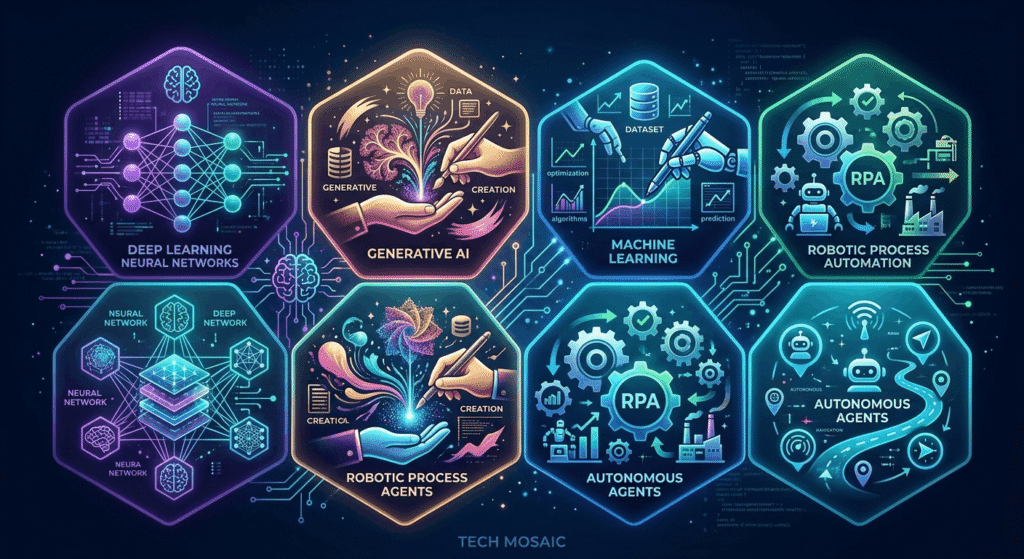
Selecting the right mix of AI tools for business enables companies to align AI implementation efforts with specific objectives, from automation to innovation and customer experience.
How Do You Select and Use AI Tools for Business?
Selecting the right AI tools for business requires aligning solutions with your organization’s unique workflows and strategic goals. Modern platforms offer capabilities across analytics, automation, and customer engagement:
1. Data Analytics & Machine Learning:
- Databricks: Unifies data, analytics, and ML for enterprise innovation.
- IBM Watson: AI-powered analytics, automation, and conversational AI.
2. Generative & Content AI:
- OpenAI (ChatGPT): Automates text generation and enhances customer support.
- Google Vertex AI: Developer-friendly, scalable AI models.
3. Automation & Business Operations:
- UiPath: Leading RPA platform for automating workflows.
- SAP Signavio: Process intelligence for digital transformation.
4. Solutions for Small and Midsize Businesses:
- Intuit: AI-driven financial management.
- RingCentral: AI-enhanced business communications.
- Thryv: CRM and marketing automation with AI.
Use Cases:
AI tools in business support hyper-personalized marketing, real-time chatbots, predictive maintenance, document automation, and AI-generated content or code for product development.
Case studies like Prompt Generator AI and High-Converting Website for RevSquared AI on Digital Prowler demonstrate how these transformations generate tangible business value.
What Are the Benefits of AI in Business?
Adopting AI drives measurable improvements throughout organizations:
Automation and Productivity
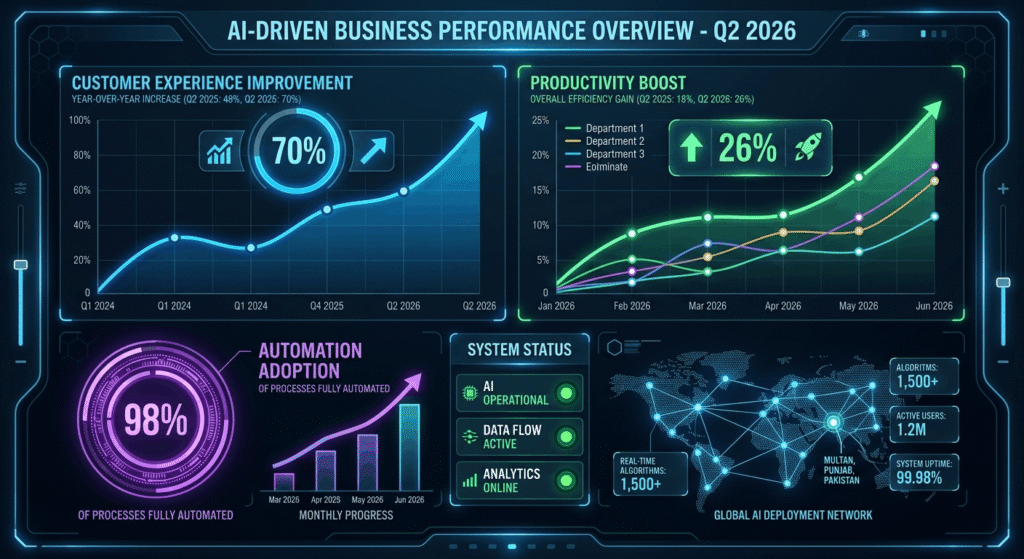
AI streamlines repetitive and manual tasks, freeing staff to focus on strategic, creative, or analytical roles. Finance teams leveraging automation report adoption rates up to 98%. Notably, 26% of businesses see more than 11% improvements in productivity or profit after AI adoption.
Data Driven Decision Making
Machine learning and analytics deliver actionable insights that reduce bias and deliver faster, more accurate decision-making. This leads to smarter strategies and effective risk management for enterprises across all sectors.
Enhancing Customer Experience
With AI-powered personalization, businesses achieve a 70% improvement in customer experience, 64% higher lead generation, and 59% better retention. Chatbots and smart assistants offer instant support and tailored solutions to customers.
Cutting Costs and Increasing Agility
AI identifies inefficiencies and optimizes resource allocation, lowering operational costs. Simultaneously, quick adaptation to new market trends enables businesses to stay competitive in today’s digital landscape.
Gaining a Competitive Edge
Leveraging the benefits of AI in business accelerates innovation, enables rapid experimentation, and helps organizations quickly pivot strategies. AI-driven enterprises consistently outperform peers in scaling digital innovation and customer-centric solutions.
How to Implement AI in Your Business
A systematic framework is vital for effective AI implementation that drives real business value:
- Assess Readiness and Set Objectives
Define clear business goals. Audit your data, processes, and technology to determine readiness for AI adoption. - Align Leadership and Build Governance
Engage executive sponsors, clarify oversight roles, establish compliance protocols, and communicate the vision for AI business transformation. - Launch Pilot Initiatives
Begin with focused pilot projects automating a time-consuming workflow or launching a customer-facing chatbot that demonstrate quick wins and digital innovation. - Upskill Teams and Redesign Processes
Invest in ongoing training. Encourage teams to redesign workflows with AI at the center, not as a peripheral add on. - Scale and Integrate AI
Expand successful pilots across business units, integrating AI with legacy and modern systems for seamless operations. - Measure and Optimize
Monitor KPIs such as efficiency, cost savings, and customer experience. Use learnings to refine your AI strategy and maximize benefit.
Adopt frameworks like the Core-and-Orbit Model and executive education from leaders such as Imperial College London to guide your approach.
Comparing Leading AI Tools and Solutions
| Tool | Features | Best for | Scalability | Pricing |
|---|---|---|---|---|
| Databricks | ML/data integration, analytics | Enterprises, data-driven teams | High | $$$ |
| IBM Watson | NLP, analytics, automation | Mid/large organizations | High | $$$ |
| UiPath | RPA, task automation | Ops-heavy businesses | High | $$–$$$ |
| OpenAI ChatGPT | Text generation, chatbots | CX, marketing, SMBs | Mod–High | Free–$$ |
| SAP Signavio | Process modeling, AI ops | Transformation teams | High | $$$ |
| Intuit | AI-powered finance/accounting | SMBs | High | $–$$ |
| RingCentral | AI business comms, analytics | SMBs/enterprises | High | $–$$$ |
For up to date features and pricing, consult the official websites, IBM Watson, UiPath, SAP Signavio, Intuit, and RingCentral.
How Is AI Powering Digital Innovation Across Industries?
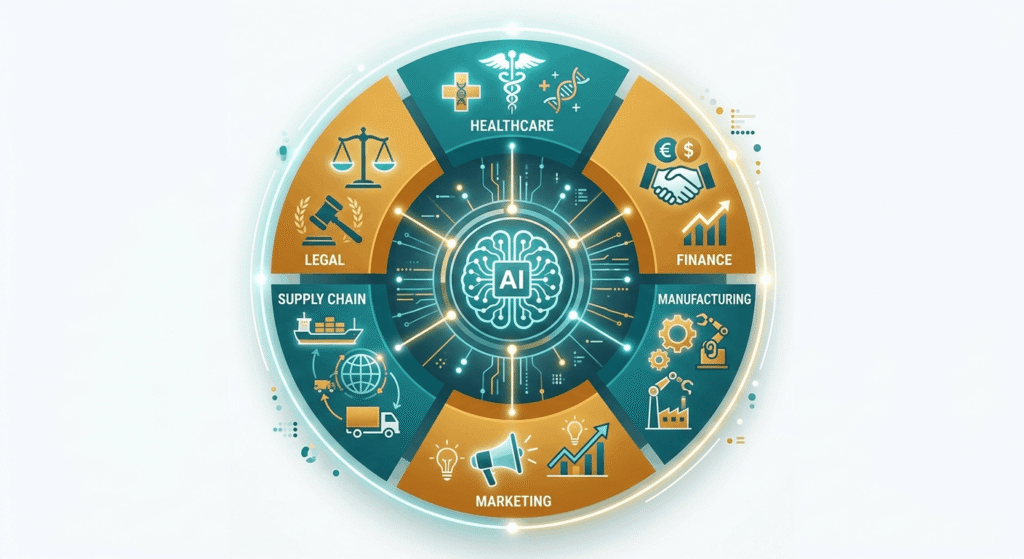
AI revolutionizes business models and enables new sources of value across sectors:
Healthcare
AI-powered diagnostics, automation, and predictive analytics result in a 53% increase in processing speed and a 57% improvement in decision quality for healthcare organizations. Automation boosts productivity and reduces human error.
Finance
Machine learning facilitates fraud detection, transaction approvals, and personalized offerings for banks and fintechs. AI-driven automation reduces processing times and increases accuracy.
Manufacturing
Deploying AI for predictive maintenance minimizes downtime, while digital twins enable virtual prototyping and accelerated product design. By 2026, these tools are becoming standard.
Marketing and Retail
Personalization engines, automated campaign management, and AI-powered insights drive higher lead generation, improved retention, and superior customer experience.
Supply Chain and Operations
Intelligent route optimization, automated procurement, and demand forecasting make supply chains more agile and resilient in unpredictable markets.
Legal and Professional Services
Automated document review and chatbots accelerate contract analysis and streamline legal workflows, cutting costs and turnaround time.
Emerging Sectors
From education to construction and hospitality, AI is delivering efficiencies in scheduling, personalizing learning pathways, and optimizing guest experiences.
To explore tailored digital innovation, consider Digital Prowler’s design, MVP, and development services.
Common Mistakes in AI Business Transformation
Organizations often encounter pitfalls on the path to business value and successful AI adoption:
- Initiating projects without a clear, unified strategy leads to disjointed and unscalable solutions.
- Poor data readiness such as siloed or low quality data undermines AI models and limits digital innovation.
- Overlooking cultural change and workforce concerns reduces employee buy in and stalls transformation efforts.
- Treating AI as a simple “add on” instead of redesigning foundational processes impedes long term impact.
- Neglecting ethics and regulatory compliance exposes the business to legal and reputational risks.
By learning from real-world AI transformation case studies, teams can avoid costly errors and maximize results.
Risks, Challenges, and Solutions in AI Adoption
AI implementation comes with real challenges, but practical solutions exist:
Data Quality and Governance
Given that 87% of executives highlight poor data quality as a barrier, invest in robust data management frameworks and periodic audits to ensure AI tools for business operate effectively.
Legal and Regulatory Risks
Evolving data privacy laws and AI regulations require vigilance. Assign responsible teams or partners to monitor compliance and participate in policy discussions.
Talent and Workforce Impact
Shortages of AI-savvy talent persist. Upskill internally and recruit externally, leveraging programs from Kellogg and top online platforms. Automation shifts employee roles; in sectors like pharmaceuticals, 73% of leaders report staff moving from repetitive to analytical tasks.
Integration with Legacy Systems
AI must work with older business applications and ERPs. Employ phased rollouts, middleware, and process mapping tools like SAP Signavio to close the gap and ensure effective AI implementation.
Managing Cost and Change
Thoughtful investment, continuous learning, and open communication will help organizations overcome obstacles and realize the full benefits of AI in business.
FAQs
1. What is machine learning and how does it benefit businesses?
Machine learning is an AI technology enabling computers to learn from data and improve without explicit programming. It benefits businesses by automating processes such as demand forecasting, fraud detection, marketing personalization, and approval workflows, leading to smarter decisions and improved operational efficiency.
2. What are the common barriers to AI adoption?
Barriers to AI adoption include poor data quality, integration challenges with legacy systems, talent shortages, evolving regulations, and unclear leadership commitment. Overcoming these issues requires robust governance, clear strategies, executive support, adaptive technology, and workforce upskilling.
3. How can small businesses leverage AI tools effectively?
Small businesses can get started by integrating free or low-cost AI tools into customer support, marketing, and accounting. Good options include Intuit and Thryv for entry-level AI features. Start with a specific pain point, track outcomes, then scale adoption as you gain experience and confidence.
4. How can AI support sustainable and ethical business practices?
AI can help organizations meet environmental, social, and governance (ESG) goals by optimizing energy use, reducing waste, and supporting ethical supply chain management. With strong frameworks in place, AI-driven analytics can uncover inefficiencies, suggest resource optimizations, and ensure compliance with sustainability standards and labor laws. However, ethical use of AI requires well-defined governance and regular auditing to avoid bias and promote fairness.
5. What steps can businesses take to ensure successful AI integration with existing systems?
To ensure smooth AI integration, businesses should start with a thorough review of their current technology stack, identify interoperability challenges, and use middleware or APIs to connect new AI solutions with existing ERPs or CRMs. Phased rollouts and pilot programs can help reduce risk, while ongoing stakeholder collaboration and robust change management ease the transition for teams across the organization.
Conclusion
AI business transformation is redefining digital innovation, delivering powerful gains in productivity, data-driven decision-making, and customer experience. By selecting the right AI tools for business, building on the pillars of people, process, and platforms, and adopting a strategic, integrated approach, your organization can unlock immense business value. Begin your AI journey now and drive lasting success, with expert support available from Digital Prowler.