

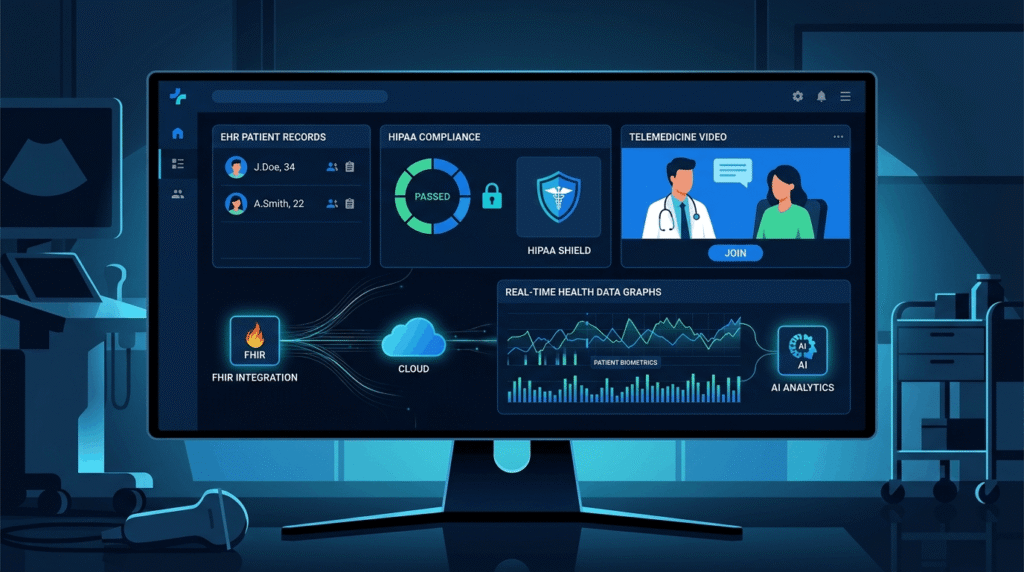
Quick Answer Box: Custom healthcare software development is the process of designing and building digital solutions tailored to meet healthcare organizations’ unique clinical, administrative, and compliance needs. In 2026, custom platforms enable HIPAA compliance, advanced workflows, and scalable tools like telemedicine, EHR, and patient portals—driving efficiency, integration, and better care.
What Is Custom Healthcare Software Development?
Custom healthcare software development is the comprehensive process of creating, integrating, and maintaining specialized digital platforms and applications tailored to the unique operational and compliance demands of healthcare organizations, payers, and startups. Unlike generic off-the-shelf products, these custom healthcare software solutions including EHR, telemedicine platforms, healthcare CRM solutions, clinical decision support software, and patient portals—are built to closely match unique workflows, regulatory requirements such as HIPAA, and technology standards like FHIR. This approach ensures that medical providers can improve care delivery, optimize data flows, and guarantee regulatory compliance while also adapting to emerging needs and rapid industry changes.
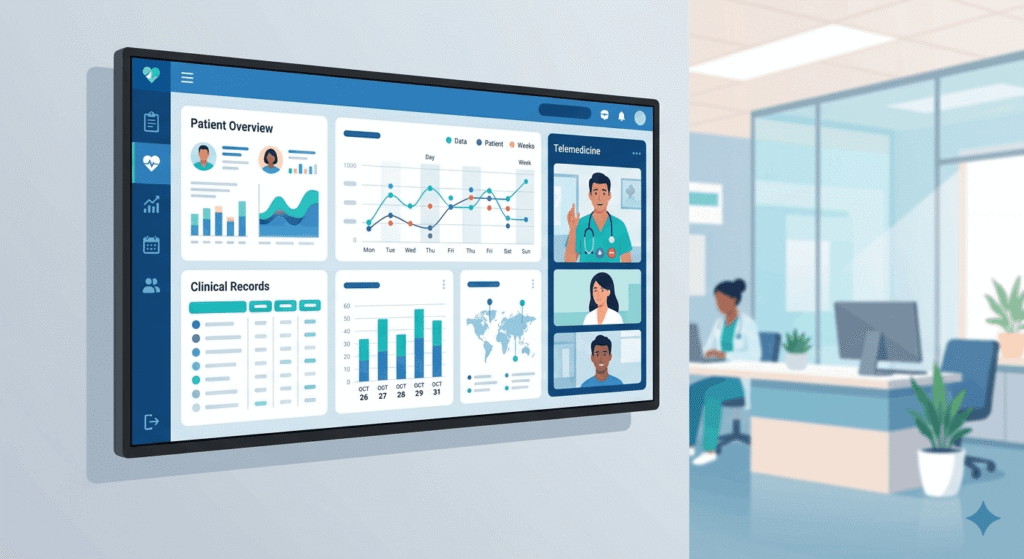
What Are the Benefits of Custom Healthcare Software?
Organizations choosing custom healthcare software gain numerous tangible benefits:
Custom solutions are purpose-built to streamline clinical and administrative workflows, eliminating manual data entry and reducing operational bottlenecks. This workflow alignment can cut documentation time by up to 60% and accelerate patient throughput. Comprehensive patient engagement tools, such as secure portals and mobile applications, lead to an average of 41% improvement in engagement and 26% increases in patient satisfaction, as confirmed by industry case studies.
Beyond operational gains, the return on investment (ROI) for custom healthcare software is significant. These platforms seamlessly scale as an organization grows, integrate with both legacy and emerging healthcare IT solutions, and reduce dependency on recurring licensing fees. Critically, designing for compliance from the outset—addressing HIPAA, GDPR, and FDA requirements—reduces the risk of audits and penalties. Having direct control over features protects organizations from vendor lock-in and supports ongoing innovation at a pace determined by their own strategic goals.
What Types of Custom Healthcare Software Solutions Are Common in 2026?
In 2026, the healthcare IT landscape is defined by a diverse range of custom healthcare software solutions, each fulfilling specialized needs:
- Electronic Health Record (EHR) and Electronic Medical Record (EMR) systems
- Telemedicine and remote patient monitoring (RPM) platforms
- Patient portal solutions for engagement, billing, and digital care access
- Healthcare CRM solutions for managing relationships and automating workflows
- Clinical decision support software powered by AI and advanced analytics
- Custom integrations ensuring interoperability across devices, billing, and administration
Telemedicine and Remote Patient Monitoring
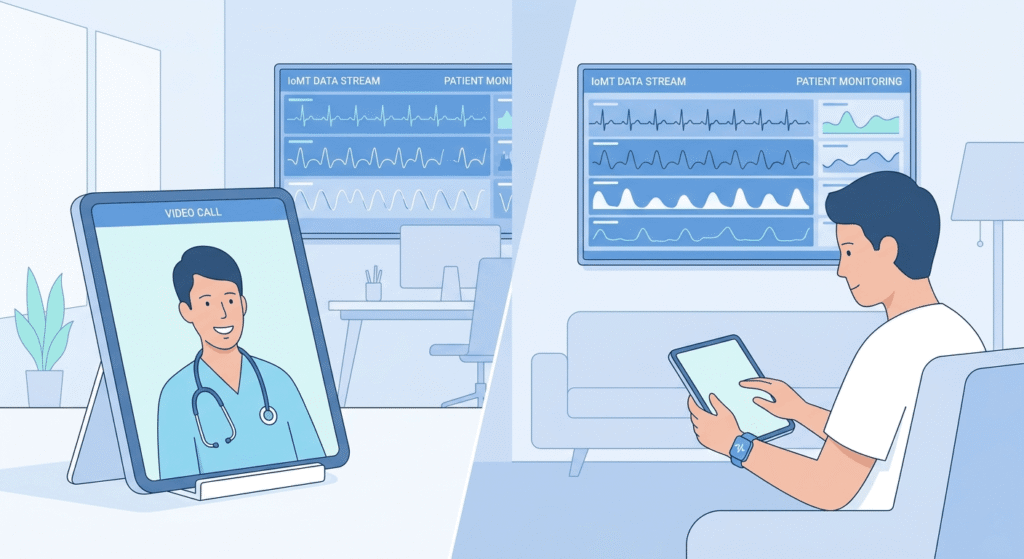
Telemedicine is now a standard offering in custom healthcare software development, fueled by the need for real-time consults and decentralized care delivery. By 2026, the global telehealth market is projected to reach $175 billion, with custom platforms providing HIPAA-compliant video consultations, digital prescriptions, device data integration, and secure asynchronous messaging. These platforms ensure clinics and health systems retain full autonomy over functionality and data security.
Remote patient monitoring platforms, a key component of modern healthcare IT solutions, enable proactive chronic care management and post-discharge monitoring. Integrating with the Internet of Medical Things (IoMT), these systems provide early alerts, continuous health tracking, and high engagement—over 60% of patients express preference for remote services when given the choice.
EHR/EMR and FHIR Integration
Custom EHR and EMR systems remain foundational, and in 2026, their interoperability is driven by broad adoption of FHIR (Fast Healthcare Interoperability Resources) standards. More than 67% of US hospitals now utilize FHIR standards to achieve seamless data exchange between providers, platforms, and payers.
Developing EHR solutions that adhere to HL7 and FHIR standards ensures flexible integration with third-party applications, mobile apps, and AI analytics engines. Furthermore, these custom systems can embed specialty-focused modules, automation features, and granular reporting tools, fully reflecting clinical and regulatory needs.
Healthcare CRM and Patient Portals
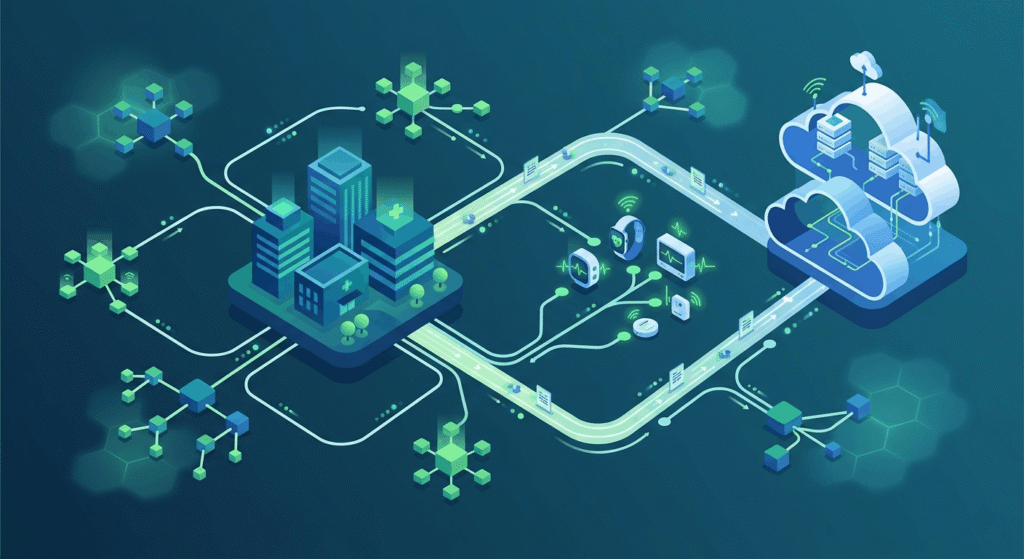
Healthcare CRM solutions, along with advanced patient portal technology, directly support patient loyalty and enhance the healthcare experience. By integrating data such as patient histories, communication preferences, and automated scheduling with outreach tools, CRM systems drive efficiency. Feature-rich patient portals offer capabilities like secure messaging, online billing, telemedicine appointments, and real-time access to health records—all underpinned by robust HIPAA-compliant protocols.
Organizations that invest in custom portals and CRM software can tailor workflows, branding, and access controls, resulting in engagement rates up to 41% higher than those using off-the-shelf solutions.
Clinical Decision Support Software
Clinical decision support software is becoming a requirement for health organizations seeking to leverage evidence-based medicine and AI-powered analytics. These systems provide intelligent alerts, predictive insights, and recommendations at the point of care, helping clinicians make more accurate and timely decisions while reducing errors.
When integrated across EHR, CRM, and telemedicine platforms, custom clinical decision support software simplifies clinician workflow and drives improved outcomes. Industry leaders such as Oracle and NVIDIA are powering automation and clinical intelligence in next-generation custom healthcare IT solutions throughout 2026.
The Role of Healthcare IT Solutions and Scalability
Custom healthcare software embodies the flexibility and scalability needed to match dynamic healthcare environments. Modern solutions employ cloud-native technology and microservices-based architecture, ensuring that healthcare organizations can rapidly respond to new opportunities or regulatory demands. The ability to add new modules, AI functionalities, or interfaces without re-engineering the core platform allows for cost-efficient, futureproof growth.
How Do You Develop Custom Healthcare Software?
Effective custom healthcare software development calls for a disciplined, collaborative process that integrates compliance and scalability throughout every stage:
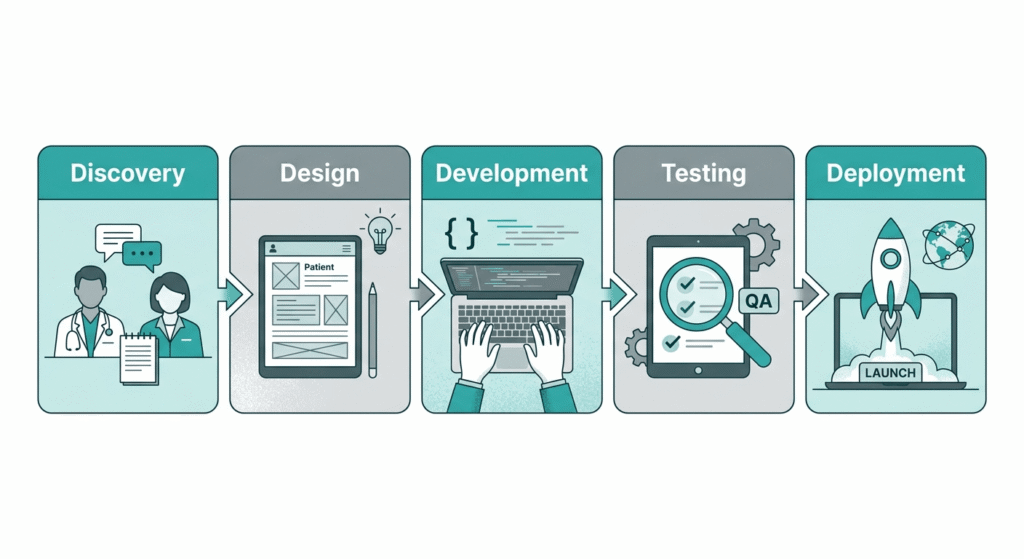
- Discovery & Requirements Gathering
Begin by mapping out clinical and administrative workflows, identifying integration requirements, and establishing the regulatory landscape. Stakeholder interviews and process mapping are critical for building a requirements checklist, including support for FHIR-based APIs, HIPAA compliance modules, and patient engagement features. - Design: UI/UX and Architecture
Apply modern UI/UX design principles, focusing on intuitive navigation, accessibility, and mobile compatibility. Technical architects should plan a modular, scalable structure—often leveraging microservices and cloud-native components—to support future growth and technology shifts. - Development & Integration
Use agile methodologies to rapidly prototype an MVP and quickly validate features with stakeholders. Integrate custom APIs for EHR, billing, device platforms, and ensure interoperability through HL7, FHIR, and DICOM standards. This phase also includes configuration for healthcare CRM solutions, decision support, and telemedicine modules. - Testing, Compliance & Validation
Conduct comprehensive quality assurance, including functionality testing, user acceptance, security screening, and compliance checks for HIPAA, GDPR, and FDA regulations. Utilize secure test environments and Business Associate Agreements (BAAs) for handling PHI. Ongoing validation assures regulatory readiness and operational reliability. - Deployment & Ongoing Support
Plan for seamless rollout through staff onboarding, user training, and thorough documentation. Strong partners provide managed hosting, automated system monitoring, and comprehensive support. Ongoing update schedules and change management procedures ensure the software remains compliant and technologically advanced. For detailed examples, explore our Prompt Generator AI case study and the RevSquared AI web development project.
Healthcare Software Support Best Practices
Continuous support is vital for mitigating risks related to regulatory changes, cybersecurity threats, and user adoption. Deploying robust monitoring tools, scheduling periodic compliance audits, and offering frequent training ensure that your custom healthcare IT solutions remain secure, efficient, and up-to-date.
What Key Features Are Required in Custom Healthcare Software for 2026?
Custom healthcare software in 2026 must meet challenging requirements for security, interoperability, futureproofing, and user experience:
- Advanced security and HIPAA compliance
- Modular, cloud-native scalability and adaptability
- FHIR and API-driven data exchange for interoperability
- AI-powered workflow automation and analytics
- Patient portal and mobile-first user experience
Security and HIPAA Compliance
Data security is paramount in all custom healthcare software development. Essential features include end-to-end encryption, robust role-based access controls (RBAC), multifactor authentication, detailed audit trails, and compliance with HIPAA, GDPR, and FDA standards. Solutions should be deployed on PHI-compliant cloud infrastructure with security embedded in every architectural layer.
Scalability and Futureproofing
As healthcare organizations expand or regulations shift, systems must be able to adapt. Cloud-native and microservices-based designs give organizations the ability to add or update modules—including those for new clinical workflows, patient engagement, or healthcare CRM—without rewriting the core application. Proactive futureproofing strategies help ensure that platforms can support increasing data volumes, emerging technologies, and new industry requirements well beyond 2026. See Future-Proofing Your Healthcare IT Stack: How to Stay Ahead Beyond 2026 for more on healthcare software futureproofing strategies.
Interoperability (FHIR, API Integrations)
Modern custom healthcare software ensures seamless connectivity and data exchange between disparate healthcare IT solutions. Adoption of FHIR, HL7, and DICOM standards allows for easy integration with EHRs, healthcare CRM solutions, imaging devices, and insurance systems. Cloud platforms such as AWS HealthLake and Azure API for FHIR exemplify next-generation interoperability, supporting scalable, compliant solutions that eliminate data silos.
Custom Healthcare Software vs Off-the-Shelf Solutions
All healthcare organizations must weigh the advantages of custom healthcare software against the convenience of off-the-shelf products. The choice impacts workflow efficiency, compliance, costs, and scalability.
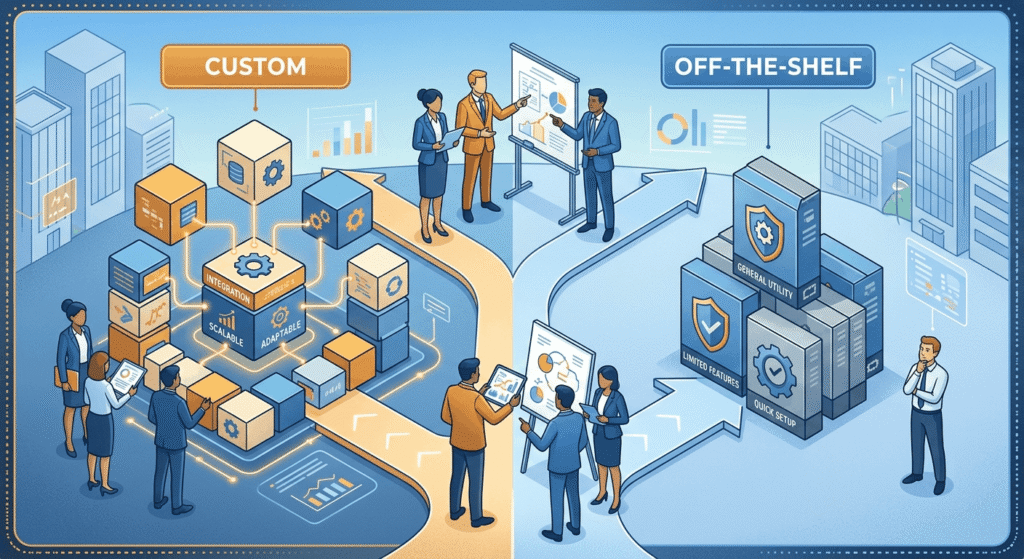
Custom vs Off-the-Shelf Healthcare Software
| Factor | Custom Healthcare Software | Off-the-Shelf Healthcare Software |
|---|---|---|
| Workflow Fit | Tailored to exact needs | Pre-set, limited customization |
| Compliance | Built for HIPAA, GDPR, FDA, NIST, SOC 2 | May require extra compliance steps |
| Interoperability | Full FHIR/API, legacy & new platform support | Vendor-limited integrations |
| Cost | $40,000–$2,000,000+ upfront | Lower initial, ongoing license fees |
| Scalability | Designed for growth, modular upgrades | Limited; may need replacement |
| Support | Dedicated, custom SLAs | Standardized vendor support |
| Vendor Lock-In | None (you own code/IP) | High; data and features tied to vendor |
| AI/Automation | Integrated by demand | May be restricted by product roadmap |
| Branding/UX | Fully branded, custom UI/UX | Generic interface, fixed branding |
What Mistakes Do Organizations Make With Custom Healthcare Software Development?
Healthcare organizations aiming for digital transformation often encounter key pitfalls with custom healthcare software development. Common mistakes include underestimating compliance complexity, leading to costly delays and regulatory setbacks. Failing to involve clinicians and frontline staff in requirements gathering can result in low user adoption and process inefficiencies.
Additionally, neglecting long-term scalability and futureproofing can force expensive rewrites or create operational bottlenecks as patient volume grows. Skimping on interoperability—such as bypassing FHIR, DICOM, or robust API development—causes data silos and fragmented workflows. Lastly, failing to invest in ongoing support and update strategies leaves systems exposed to cybersecurity threats and regulatory non-compliance as technology and rules evolve.
How Do You Decide Between Custom Solutions and Off-the-Shelf Healthcare Software?
Deciding whether your organization needs custom solutions or off-the-shelf software hinges on specific requirements and strategic goals. Custom healthcare software is the best option when:
- Your workflows or clinical requirements are uniquely complex
- Strict HIPAA, FDA, or SOC 2 compliance must be achieved from the outset
- You anticipate growth, require AI features, or demand targeted integration with legacy or emerging platforms
- Reducing long-term licensing and avoiding vendor lock-in is critical
- Full control over user experience, branding, and system updates is a strategic imperative
If your internal IT team lacks deep healthcare compliance or user experience expertise, working with a specialized development partner often delivers the best results. For expert consultation, see our Contact Us page or learn more about Development services.
Healthcare IT Build vs Buy Considerations
Analyze your internal capacity to implement vital features for scalability, interoperability, and security. Compare potential time-to-market, ROI, and support models from trusted healthcare IT solutions partners with what is achievable by your in-house teams. For additional detail on making this decision, review our guide, “A Guide to Choosing Healthcare IT Partners vs. Building In-House Teams.”
Frequently Asked Questions
1. What is the typical cost of custom healthcare software in 2026?
As of 2026, custom healthcare software development costs typically range from $40,000 to over $2,000,000. Simple patient portals or mobile apps can be built for $40,000–$100,000, while robust enterprise EHR, telemedicine, or AI-driven platforms with FHIR and device integration generally cost $200,000 to $2 million or more, depending on requirements.
2. How long does it take to develop custom healthcare software?
Development timelines depend on project complexity. More basic modules can be completed within several months, while multi-module platforms—such as integrated EHR, telemedicine, and clinical decision support software—often require 12 to 24 months. These longer timelines reflect the need for compliance verification, advanced integrations, and thorough user testing.
3. How do you ensure HIPAA and regulatory compliance?
Achieving regulatory compliance requires embedding HIPAA and FDA reporting in the software’s core, encrypting all protected health information at rest and in transit, employing detailed audit trails and role-based access controls, and hosting solutions in certified cloud environments. Regular audits and Business Associate Agreements (BAAs) are essential to ensure continuous compliance.
4. What features should a modern patient portal include?
A patient portal in 2026 should provide secure authentication, digital access to health records, test results, and telemedicine. Other must-haves include online bill payment, real-time messaging with providers, appointment booking, mobile-responsive design, automated reminders, and educational resources presented in a user-friendly dashboard.
5. How to select the right development partner for your project?
Look for a healthcare software development partner that offers proven industry experience, a strong compliance track record, transparent methodologies, and the ability to deliver interoperable and scalable healthcare IT solutions. Confirm they provide comprehensive post-launch support, clear SLAs, and a commitment to ongoing updates and cybersecurity.
Conclusion
Custom healthcare software development enables organizations to meet evolving compliance needs, enhance patient engagement, and achieve scalable, future-ready IT infrastructure for 2026 and beyond. By investing in tailored solutions such as telemedicine, EHR, healthcare CRM solutions, clinical decision support software, and integrated patient portals, healthcare providers are empowered to deliver exceptional care, stay agile amid regulatory shifts, and drive long-term strategic value in their digital transformation journey.