

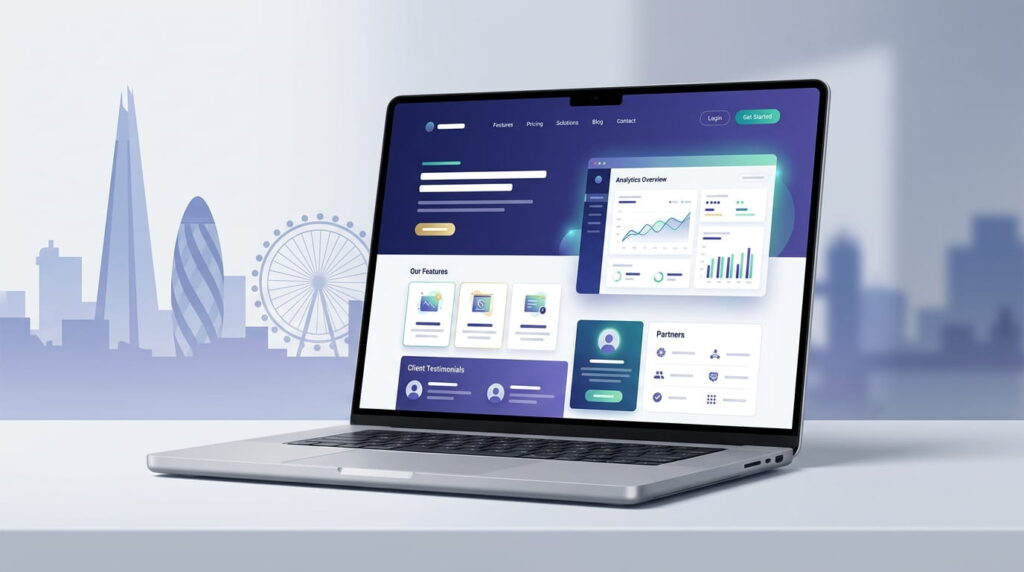
Quick Answer Box: London startup website design in year one needs five things: a clear positioning message, three to five core pages, mobile-first responsive layouts, working analytics, and UK legal disclosures in the footer. Most London founders pay £2,000 to £7,000 for an agency build. Launch small, then rebuild once paying customers tell you what they actually need.
What is London Startup Website Design?
London startup website design is the practice of building a first website for an early-stage company trading in London, balancing a thin budget against investor scrutiny, UK compliance rules and a mobile-heavy audience. It favours clarity and speed to market over polish, and assumes a rebuild inside eighteen months.
Across London, from Old Street to Canary Wharf, first sites get built under the same pressure: a demo next month, a raise after that, and nobody on payroll who owns the website. So it gets treated as a brochure. That’s the mistake. Your site is the second thing an investor opens after your deck, and the first thing a candidate checks before replying.
What Should a Startup Website Include in Year One?
A year-one startup website should include a homepage that states what you sell in plain English, a product page, an about page with real names and faces, a contact route a human answers, and a footer carrying your legal company details. Everything else can wait.
Startup Branding Before Pixels
Startup branding comes first because every design decision downstream depends on it. Not a full identity system, just the working minimum: a name, a wordmark, two or three colours that pass contrast checks, one typeface pairing, and a one-sentence description a stranger can repeat back to you.
Founders often skip this and ask a designer to “make it look good.” The designer then invents the positioning by accident, and you inherit it. Build the basics in Figma so your developer, your deck and your pitch materials all pull from one source, and read our guide to brand identity for early-stage companies before you brief anyone.
UX Design and UI Design That Survive a Pivot
UX design is the order information reaches the visitor. UI design is what it looks like once it arrives. Startups conflate the two and ship a beautiful site nobody can use.
Early-stage sites convert badly by default. First Page Sage puts whole-site visitor-to-lead conversion for B2B SaaS at roughly 1.1%, the lowest of 25 industries tracked, and Unbounce’s analysis of 57 million conversions found a 3.8% median for SaaS landing pages against 6.6% overall. Assume the bottom of that range on day one.
The practical fix is structural. Give every page one primary action. Write buttons that describe the outcome (“Book a 20-minute demo”) rather than the mechanism (“Submit”). Keep form fields under five. Then instrument the thing with Google Search Console and an analytics tool you’ll actually open on a Monday. Component-based layouts and a simple CMS also mean your positioning can shift without a rebuild, which it will.
The Footer London Founders Keep Getting Wrong
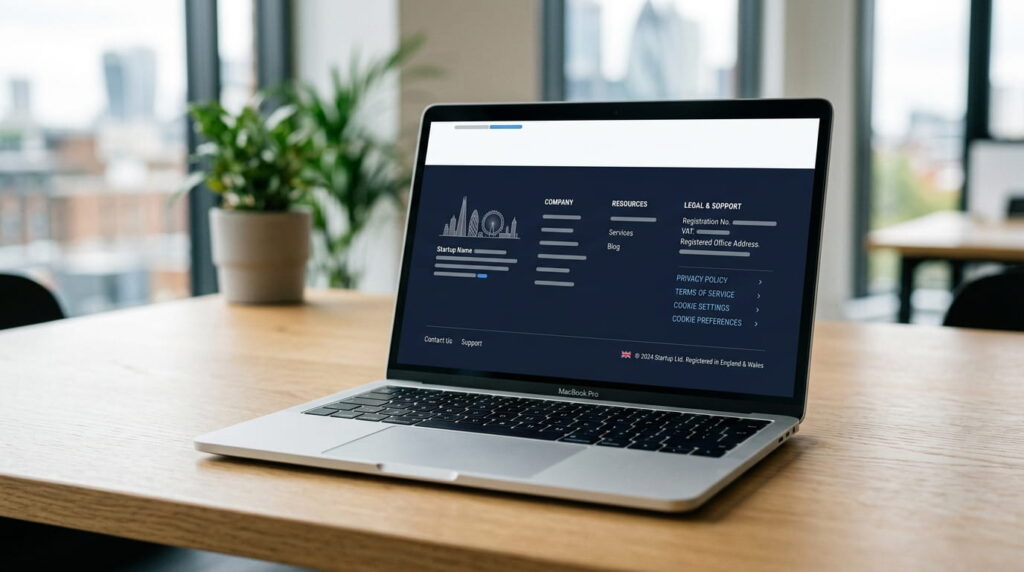
Here’s the part most web design articles skip. Under the Companies (Trading Disclosures) Regulations 2008 and the Electronic Commerce (EC Directive) Regulations 2002, a UK limited company must show its registered name, company registration number, place of registration and registered office address on its website, plus a VAT number where applicable. Trading name alone isn’t enough.
Cookies changed recently as well. The Data (Use and Access) Act 2025 took effect on 5 February 2026 and dropped the prior-consent requirement for analytics-only and appearance cookies, provided you inform users clearly and give them a free way to object. Advertising pixels still need consent, and PECR fines rose from a £500,000 ceiling to £17.5 million or 4% of worldwide turnover.
Accessibility sits alongside this. The Equality Act 2010 applies to private businesses serving UK customers, and WCAG 2.2 AA is the standard procurement teams reference. Colour contrast, keyboard navigation and alt text cost almost nothing at build time and a fortune to retrofit.
How Much Should Responsive Web Design Cost a London Startup?
Responsive web design for a London startup typically costs £2,000 to £7,000 through an agency, or £1,000 to £3,000 with an experienced freelancer. UK designer rates run from roughly £35 per hour at the junior end to £150 or more for senior specialists, and London commands a premium over the rest of the country.
| Build route | Typical UK cost | Best for |
|---|---|---|
| Freelance designer | £1,000 to £3,000 | Pre-seed, one clear product |
| Small agency | £2,000 to £7,000 | Seed stage, needs strategy input |
| Custom or ecommerce build | £5,000 to £15,000 | Transactional or complex products |
| Founder-built on a no-code tool | £0 to £500 plus your time | Validating before spending |
No-code has changed the maths at the bottom end. A founder with taste can ship a credible site on Webflow in a fortnight. Whether that’s cheaper depends on what your fortnight is worth.
Mobile Optimisation Is Not Optional Here
Mobile optimisation decides whether the money above was well spent. Cloudflare Radar figures for July 2026 show 54.18% of human UK web traffic came from mobile once bots were filtered out, rising to roughly 60% at weekends. Raw numbers including bots look desktop-heavy, which is why some agencies still design desktop-first. Wrong figure.
Speed is measured, not felt. Google’s Core Web Vitals thresholds are 2.5 seconds for Largest Contentful Paint, 200 milliseconds for Interaction to Next Paint and 0.1 for Cumulative Layout Shift, assessed at the 75th percentile of page loads and split by device. Test on PageSpeed Insights before launch, then again a month later, once someone has added three tracking scripts and an uncompressed hero image.
Is MVP Website Design Better Than a Full Build?
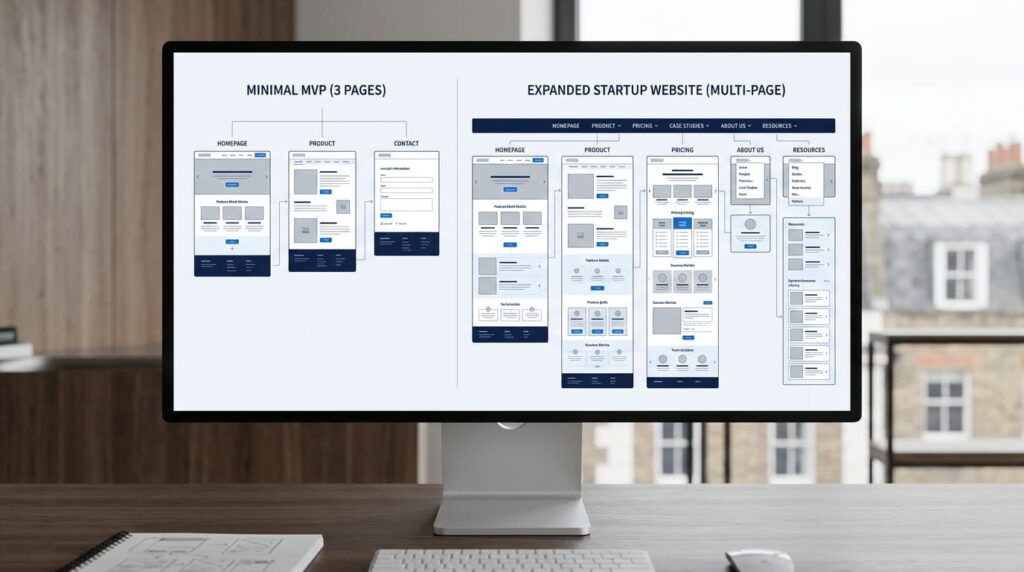
MVP website design suits most London startups in year one because it costs less, ships faster and produces real user data before you commit to a structure. A three-page site live in three weeks teaches you more than a fifteen-page site live in four months. Regulated sectors are the exception.
Think of it as two releases. Release one proves the positioning: homepage, product page, contact, footer, analytics. Give it six to eight weeks in market. Release two answers what you learned, adding the pricing page people kept asking about and the case studies sales needed.
Startup web design agencies will push for the bigger scope, and that isn’t always self-interest. If you’re raising imminently or selling into enterprise procurement, a thin site does real damage. Judge it by who has to believe you.
One caveat. MVP thinking fails when founders treat “minimum” as permission to skip the fundamentals, so pair it with technical SEO foundations for new sites from day one. Compliance, accessibility and mobile performance aren’t phase two. They’re the floor.
Frequently Asked Questions
1. How long does it take to design a website for a London startup?
Three to six weeks for an MVP build of three to five pages, and eight to twelve weeks for a larger custom site. Timelines slip on content, not design. Founders who write their copy before the design kickoff typically save two weeks.
2. Do I need a .co.uk or a .com domain for a London startup?
Buy both if the budget allows, and point one at the other. A .co.uk signals a UK trading presence to local customers, which helps with regional search visibility. A .com matters more if you plan to sell internationally or raise from US investors within the next two years.
3. What legal information must a London startup show on its website?
A UK limited company must display four things under the Companies (Trading Disclosures) Regulations 2008:
- Registered company name, not just the trading name
- Company registration number
- Place of registration, such as England and Wales
- Registered office address
Add your VAT number if you’re registered, and a privacy policy covering UK GDPR.
4. Should a startup use a website template or a custom design?
Templates work well in year one when the product is simple and the budget is under £2,000. Custom design earns its cost once you have a defined brand position, multiple audience segments, or conversion data showing where a template layout is losing you leads.
5. Does website design affect a startup’s chances of raising funding?
Indirectly, yes. Investors rarely fund a company because of its website, but they do check it, as do candidates, journalists and partners. A site with broken mobile layouts or missing company details reads as operational carelessness, which is a harder thing to unlearn than a design flaw.
Conclusion
Year one is not the year for your best website. It’s the year for your fastest useful one. Get the positioning clear, the mobile experience quick, the legal footer correct and the analytics running, then let paying customers tell you what release two should be. London startup website design rewards founders who ship early and rebuild on evidence, not those who spend nine months perfecting a homepage for a product that changed in month four. If you’d rather hand it over, see how we approach web design for London businesses.