

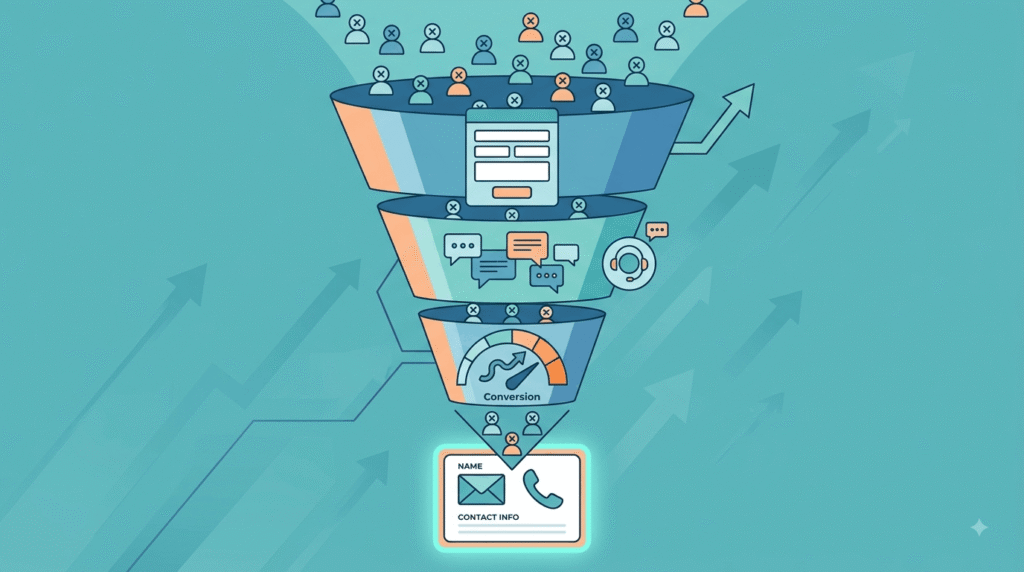
Quick Answer: To generate leads from your website, cut friction on the path to contact and answer fast. Shorten forms to three fields, load pages in under three seconds, give every page one clear action, add proof beside the ask, and reply to every inquiry within five minutes.
What does it mean to generate leads from your website?
To generate leads from your website means turning anonymous visitors into named contacts you can follow up with. A lead is anyone who hands over an email, a phone number, or a booking request. Traffic is not a lead. The exchange only counts once you can reach the person directly.
TL;DR
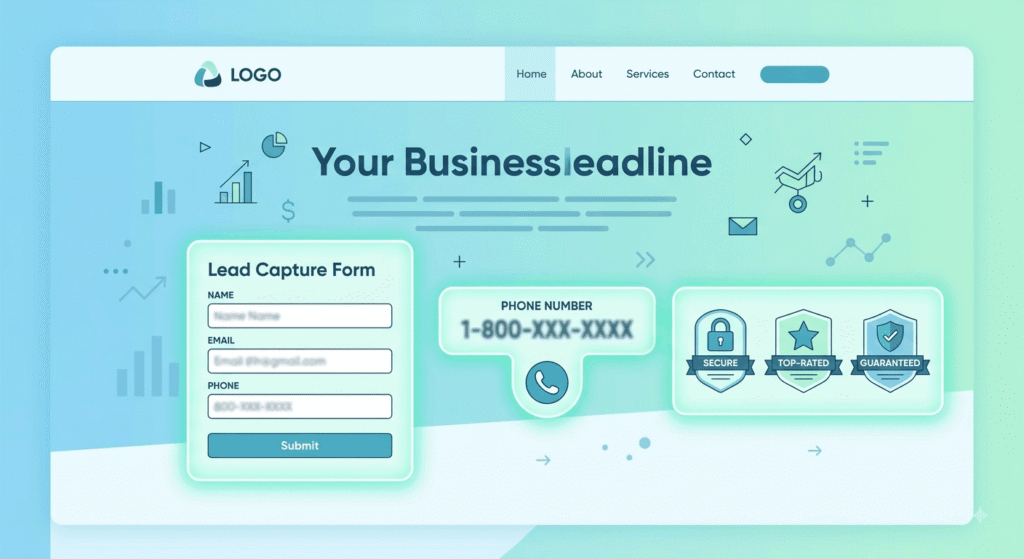
- Three-field forms convert at 11.5% against 8.1% for five fields, so every dropped question is revenue (Neil Patel, 404-page dataset).
- A one-second load delay costs about 7% of conversions, and 53% of mobile visitors leave pages slower than three seconds.
- Replying in five minutes instead of thirty makes a lead 21 times more likely to qualify, per the MIT and InsideSales study.
- AI referral traffic converts roughly 4.4 times better than organic search, yet only about 14% of marketers track it separately.
Why do most business websites get traffic but no new business leads?
Most sites lose leads at the handoff, not the visit. First Page Sage puts the average B2B website at 3.6% conversion and B2C at 3.9%. Sites underperforming that range almost always share the same friction: a form built to make the sales team’s life easy, sitting on a page that takes too long to appear.
Traffic hides the problem. A site pulling 10,000 visits a month at 1% conversion looks busy and yields 100 new business leads. At 3% it yields 300.
10 proven ways to generate leads from your website
Ranked roughly by effort against payoff, these are the changes that generate leads from your website fastest. Start at the top. The first four cost nothing but an afternoon. The last few take a month of consistent work before leads show up.
- Cut your contact form to three fields. Neil Patel’s analysis of 404 landing pages found three-field forms converting at 11.5% against 8.1% for five fields. Name, email, one question.
- Fix page speed before you touch design. A one-second delay costs roughly 7% of conversions, and 53% of mobile visitors abandon anything slower than three seconds. Run your key pages through PageSpeed Insights.
- Give every page one job. Single-purpose landing pages without navigation convert around twice as well as standard pages carrying a form. Remove the menu and anything competing for the click.
- Reply inside five minutes. The MIT and InsideSales Lead Response Management study found the odds of qualifying drop 21 times between a five-minute and a thirty-minute callback. Harvard Business Review clocked the average at 42 hours.
- Put a real offer behind the email field. Popups asking for a subscription with nothing attached convert at 5.10%. Attach a checklist or a pricing guide and that rises to roughly 7.6%.
- Add live chat to pricing and service pages. Chat conversations convert in the 10% to 20% range against 2% to 3% for static forms. They answer the objection about to end the visit.
- Move proof next to the ask. Testimonials on sales pages lift conversions about 34%, per VWO, and products with five or more reviews are 270% more likely to be bought (Spiegel Research Center).
- Claim your Google Business Profile and post weekly. Nearly half of all Google searches carry local intent, and Local Pack listings pull 126% more traffic than results ranked four through ten.
- Write pages that answer the exact question buyers type. Zero-click searches climbed from 56% to 69% after AI Overviews rolled out, so direct-answer pages get quoted where the blue link sat.
- Watch what visitors actually do. Microsoft Clarity is free and shows rage clicks plus the scroll depth where people quit. Fixing one broken mobile button often beats a redesign.
Why does AI search traffic convert better than Google organic?
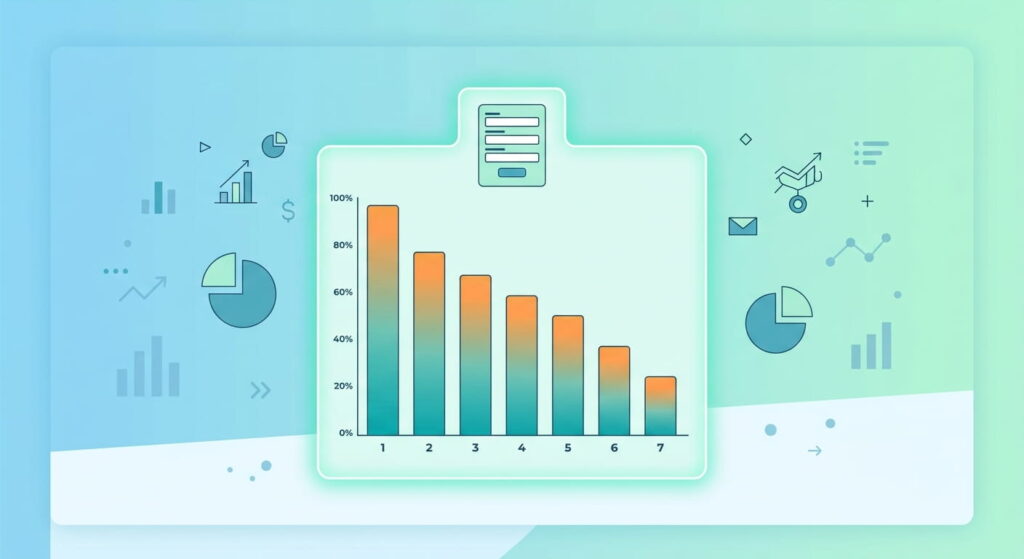
Because the assistant pre-qualifies the click. Semrush’s 2026 data puts AI-referred visitors at roughly 4.4 times the conversion rate of standard organic search, and Adobe Analytics measured AI-referred shoppers on US retail sites converting 42% better than non-AI traffic in March 2026, reversing a 38% deficit a year earlier.
Ahrefs found AI search made up 0.5% of its traffic but 12.1% of its signups. Small volume, high intent. Only about 14% of marketers track AI referrals separately, so most teams undercount their best source. GA4 needs a custom channel group.
What does landing page optimization actually change?
Landing page optimization changes what the visitor has to decide. Unbounce’s analysis of 41,000 landing pages put the median conversion rate at 6.6%, while WordStream’s broader dataset covering every page type sits at 2.35%. The gap comes from structure. Dedicated pages remove the choices that general site pages leave in.
Match the headline to the phrase that brought the person there, and test one element at a time. If your pages were never built to convert, that’s a website development problem.
Which lead capture forms convert best?
Short low-commitment forms convert widest, sales-intent forms convert deepest, and most sites need both running. A one-field email capture converts at 18.2% while a five-field quote request drops to 8.1%. That spread maps buying stage. Neither number is a verdict on form design.
| Capture method | Conversion rate | Effort | Best placement |
|---|---|---|---|
| Email-only signup | 18.2% | Low | Blog posts |
| Three-field contact form | 11.5% | Low | Service pages |
| Exit-intent popup | 3.8% to 3.9% | Low | Pricing pages |
| Lead magnet popup | 7.5% to 7.7% | Medium | Long-form articles |
| Live chat | 10% to 20% | High | Pricing pages |
| Dedicated landing page | 6.6% median | Medium | Paid campaigns |
Our RevSquared AI website case study shows that mix on a live site.
How can a small business generate local leads from its website?
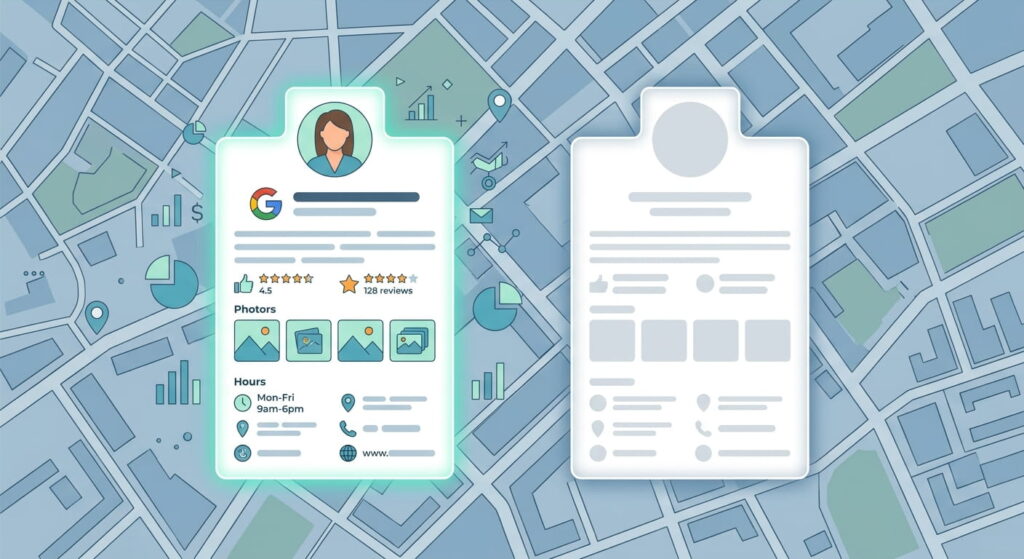
Local intent drives about 46% of all Google searches, and 76% of people who run a near-me search visit a business within a day. To generate local leads you need consistent name, address, and phone details across your site and your Google Business Profile, plus a page for each service area you cover.
The average profile produces 59 actions a month: 20 website clicks, 16 direction requests, and 10 calls, per BrightLocal’s 2026 data. Reviews handle the rest. Purchase likelihood peaks between 4.0 and 4.7 stars rather than a spotless 5.0 (Spiegel Research Center).
Common mistakes to avoid with website lead generation
The costliest mistake is treating form fill rate as the only score. One B2B team cut a form from seven fields to three, lifted submissions 38%, and watched closed deals fall 41% because the removed fields had been doing the sales team’s qualifying work.
Two more show up constantly. Hiding the phone number behind a contact page costs every visitor who wanted to call. Rebuilding a whole site after leads drop, when the culprit was a mobile form that broke in March. Check session recordings before commissioning new UI and UX design.
Where should you start with these lead gen tactics?
Start with speed and follow-up, because both compound across every other change you make. If your pages load in under 2.5 seconds for Largest Contentful Paint and someone answers inquiries within five minutes, every tactic above works harder. Fix those two first, then work on capture.
Most owners asking how to get leads faster already have enough traffic. Under 1,000 visits a month, skip testing and copy what works. Above 10,000, split-test the form and headline. Verify the site in Google Search Console to see which pages pull traffic worth converting.
Frequently asked questions
1. What is a good conversion rate for a lead generation website?
Anything above 3.5% beats most industries. First Page Sage puts the B2B average at 3.6% and B2C at 3.9%, with legal services on top at 7.4% and software near the bottom at 1.1%. Compare against your own sector first.
2. How do you get leads from a website without paying for ads?
Four free moves cover most of it:
- Claim and post weekly on your Google Business Profile
- Publish pages answering the exact questions buyers type into search
- Add a three-field form to every service page
- Install a free session recording tool and fix what breaks
None of these need a budget.
3. How fast should you respond to a lead from your website?
Within five minutes. The MIT and InsideSales Lead Response Management study found that calling at five minutes rather than thirty raises the odds of contact 100 times and the odds of qualifying by 21. Harvard Business Review put the average at 42 hours.
4. Does live chat generate more leads than a contact form?
Usually yes on high-intent pages. Chat conversations convert at 10% to 20% against 2% to 3% for static forms, and adding chat lifts site conversion roughly 20% on average. The catch is staffing. An unanswered window costs more trust than no chat.
5. Why does my website get visitors but almost no lead capture form submissions?
Start with field count. Conversion falls from 11.5% at three fields to 8.1% at five, so an over-long form is the most common cause. Then check load time on a real phone. If both look fine, the offer gives nobody a reason to act.
Conclusion
None of this requires a rebuild. Shorten the form, speed up the page, put proof beside the button, and answer fast. Pick two changes this week and measure them for thirty days before touching anything else. That’s how you generate more leads from your website without spending another dollar on traffic.