

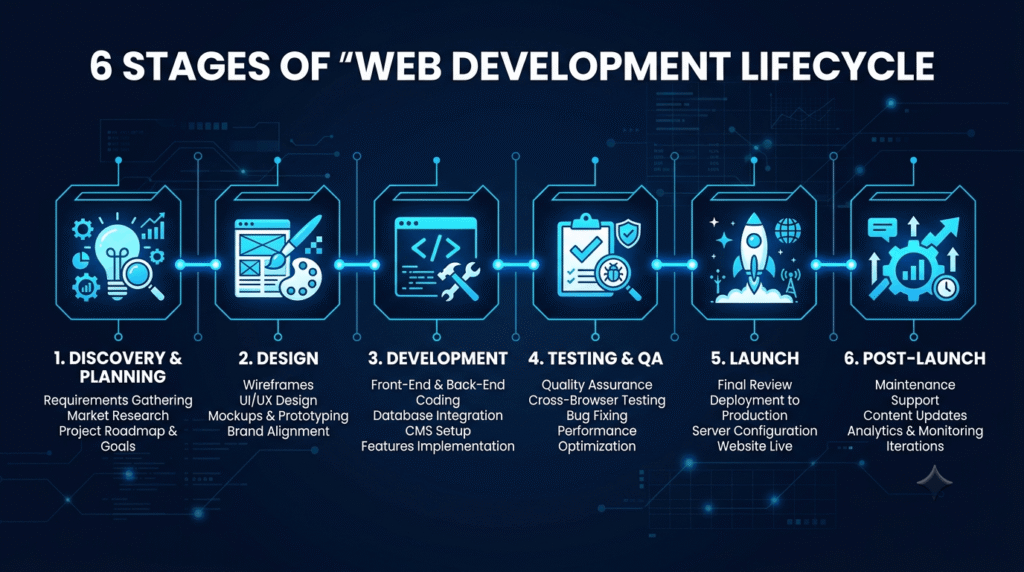
Quick Answer Box: A web development timeline defines all phases and the expected duration for a website project, from planning through post launch. Most simple sites require about 2–4 weeks, while custom development often takes several months. Knowing your timeline helps set expectations and prevent project delays.
What is a Web Development Timeline?
A web development timeline is a structured schedule mapping out each step and milestone involved in designing, developing, and launching a website. Covering the process from initial planning to post launch, this timeline clarifies resource allocation, delivers transparency, and ensures all team members are aligned on duration and deliverables.
What Are the Main Phases in a Web Development Timeline?
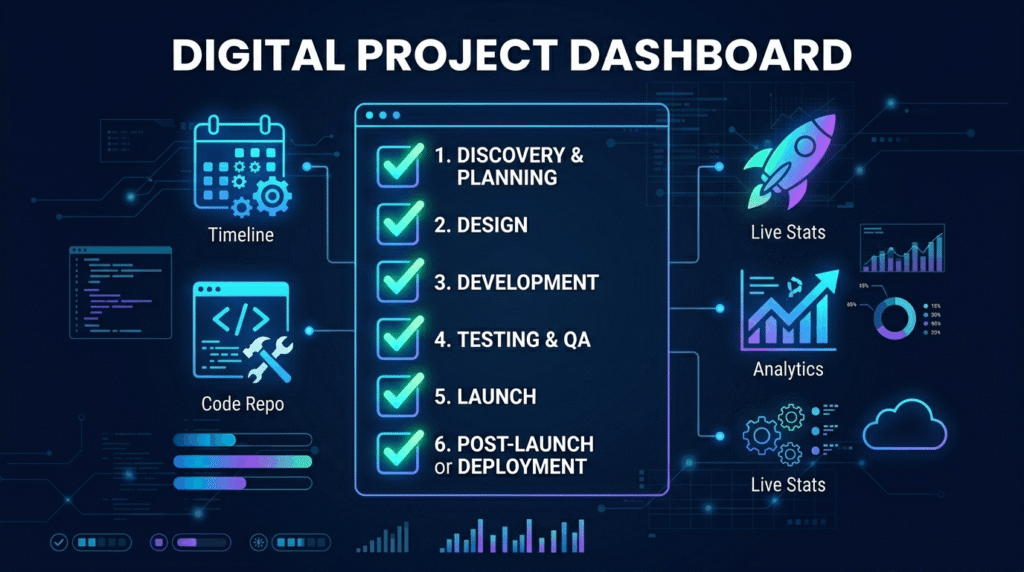
A standard web development timeline includes: Discovery & Planning, Design, Development Phase, Testing & Quality Assurance, Launch, and Post Launch support. Each step varies in duration depending on complexity, design requirements, and how quickly your team produces content or feedback. For most business websites, the end-to-end timeline falls between 6–12 weeks. Custom development for larger sites or special features may take several months.
Discovery & Planning
During Discovery & Planning (1–4 weeks), you define your project goals, target users, functional requirements, and team roles. Input is gathered from stakeholders and competitors are reviewed, providing a solid foundation for the rest of the development phase.
Design Stage
The Design stage (1–4 weeks) translates strategic goals into wireframes, visual mockups, and final UI/UX assets. Color palettes, branding, and structured user journeys are finalized for development. For inspiration, see examples at Design.
Development Phase
Throughout the Development phase (3–15+ weeks), developers code the website’s frontend and backend, configure databases, and build connection points to third-party systems. Complex applications, such as Prompt Generator AI, can extend timelines.
Testing, Launch, and Post Launch
Testing & Quality Assurance (1–2 weeks) eliminates bugs and ensures compatibility across devices. Once cleared, the Launch phase (about 1 week) involves uploading final content, completing client review, and publishing the site live. After launch, ongoing support, analytics, SEO enhancements, and updates proceed on a monthly or quarterly basis. Explore a real post launch example from the High-Converting Website for RevSquared AI.
How Long Does Web Development Take for Different Projects?
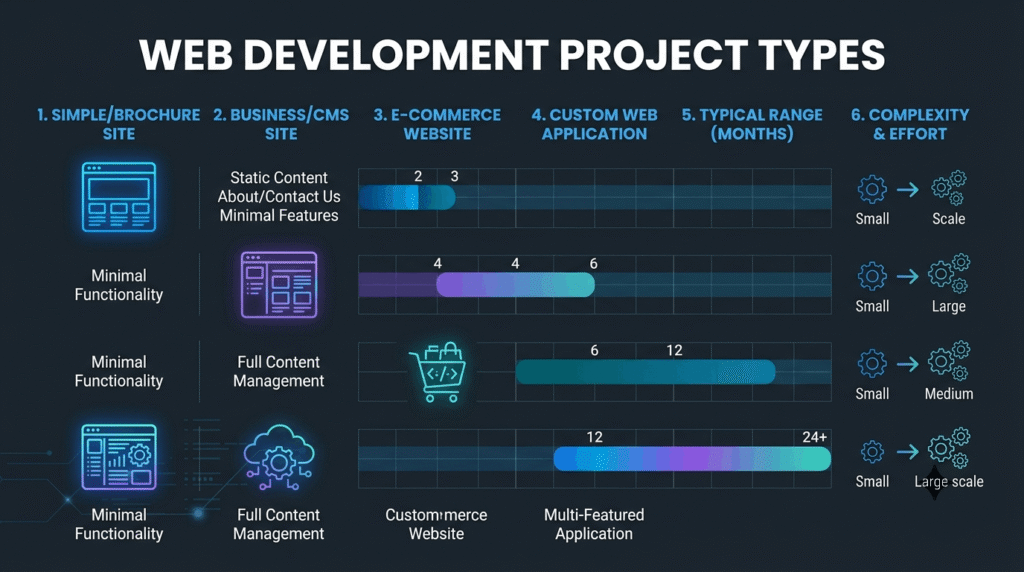
The timeline for web development depends on your project type and requirements. Simple brochure or one-page sites built with website builders like Wix or Squarespace are often completed in just 2–4 weeks. Standard business or e-commerce sites take 6–16 weeks, while more advanced custom development featuring unique integrations or applications can require several months.
Web Development Duration by Project Type
| Project Type | Discovery & Planning | Design | Development | Testing & Launch | Post Launch Support |
|---|---|---|---|---|---|
| Simple/Brochure Site | 1 week | 1 week | 1–2 weeks | 1 week | 1 month |
| Business Site (CMS) | 1–2 weeks | 1–2 wks | 3–6 weeks | 1 week | 1–2 months |
| E-commerce Website | 2–3 weeks | 2–3 wks | 5–10 weeks | 2 weeks | 2+ months |
| Custom Web Application | 3–4 weeks | 3–4 wks | 12–20 weeks | 2–3 weeks | Ongoing |
What Factors Influence Your Web Development Timeline Most?
Several variables impact both the timeline and duration of your project.
Complexity, Content, and Tools
Project complexity such as numerous pages or custom features requires more time. Readiness of approved content, text, and media dramatically affects progress. Delays on content input often cause major slowdowns. Revision cycles and stakeholder decision-making can add weeks if feedback is inconsistent or slow.
The choice of technology also plays a role. Projects built with tools like WordPress, custom stacks, or AI-driven code assistance can compress the development phase. According to recent Statista findings, over 75% of web developers use AI tools such as GitHub Copilot, reducing typical task durations by over 20% during some stages. For detailed information on tailoring your development phase, visit Development.
Should You Choose Custom Development or a Template-Based Website?
Custom development gives you a site built to exact needs—with unique design, integration, and scalable architecture. This option is best when your goals include branding control, special features, or future-proof expansion. However, timelines are longer and costs higher, so extra planning is critical.
Template-based (builder) approaches using Wix, Squarespace, or ready CMS themes accelerate launch speed for common business needs. Most simple projects using these solutions are ready in 1–2 weeks. These sites are often easier to maintain but may lack advanced features or flexibility. For early-stage prototypes or MVPs, see MVP development guidance.
FAQs
1. How long does it take to build a simple website?
Most simple websites, like single-page sites or basic business pages, can be completed in 2–4 weeks using a website builder or CMS. This includes discovery, design, development, and testing, assuming that all content and required feedback is delivered promptly.
2. Which factors delay a web development project the most?
Delays most often result from:
- Slow or incomplete content delivery
- Unclear project requirements
- Stakeholder indecision
- Too many revision cycles
Projects move fastest when stakeholders are available for feedback and provide complete content early.
3. What does post launch support cover, and why is it important?
After you launch your site, support typically includes 30 to 90 days of maintenance for bug fixes, security, and performance checks. Ongoing services might cover SEO improvements, analytics, and regular content updates. Planning for sustained post launch support keeps your site healthy and competitive.
4. How does a sitemap influence the web development timeline?
A well-structured sitemap acts as a blueprint for website architecture and navigation, enabling more accurate planning during the discovery and design phases. Having a finalized sitemap early allows smoother development, reduces scope creep, and helps avoid costly delays later in the procedure.
5. Can changes in design after development starts affect the project duration?
Yes, design changes during the development phase can significantly increase the timeline and cost. Adjustments at this stage often require backtracking on code and content, leading to rework and postponing subsequent milestones. Finalizing design assets before development is key for staying on schedule.
Conclusion
A well-planned web development timeline gives you clear expectations about each project phase and helps ensure smooth delivery. Whether you choose custom development or a template solution, aligning team resources, preparing all content in advance, and keeping communication strong leads to a successful launch. For advice on building your timeline or managing post launch needs, connect with us through the Contact Us page.