

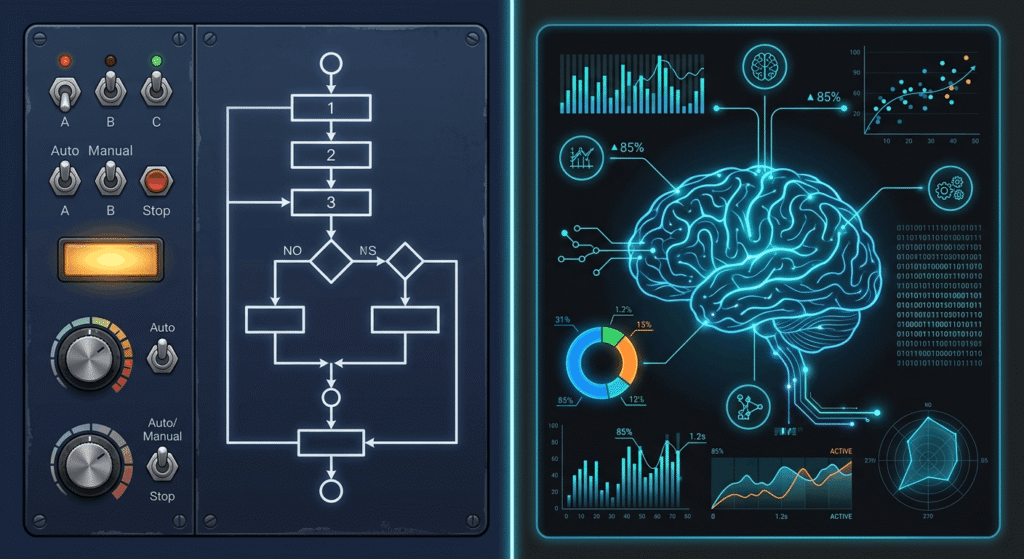
Quick Answer Box: AI marketing automation leverages machine learning to analyze data and adapt marketing campaigns automatically, while traditional automation uses static, rule-based triggers. The best system depends on your business: AI provides dynamic personalization and efficiency, whereas traditional automation offers simplicity, reliability, and stability for predictable tasks.
What is AI Marketing Automation vs Traditional Automation?
AI marketing automation uses artificial intelligence, machine learning, and predictive analytics to manage, execute, and optimize marketing tasks and campaigns with minimal manual input. Traditional marketing automation, by contrast, operates on pre-set rules and triggers efficient for repetitive tasks, but with less flexibility and intelligence.
How Does AI Marketing Automation Differ from Traditional Automation?
The biggest difference is adaptability. Traditional automation runs on fixed, rule-based workflows (e.g., sending emails to segment lists when a trigger occurs), offering reliability for common processes but limited personalization. AI marketing automation goes further it continuously interprets customer data, recognizes behavioral patterns, and refines campaigns in real time.
While traditional automation solutions like Zapier, Make, and n8n automate predictable workflows, they struggle with nuanced or individualized marketing. AI automation analyzes live data and optimizes outreach dynamically, delivering personalized content and recommendations as customer behaviors evolve.
Most effective marketing strategies combine both: traditional automation for core stability, and AI for scalable, intelligent personalization and segmentation.
Marketing Personalization and Customer Segmentation
Traditional automation segments audiences by static factors (location, demographics, history), then sends set messages per group efficient, yet inflexible. AI, meanwhile, constantly digests real-time customer behavior to personalize experiences and content for each individual.
According to GTM 80/20, 77% of marketers use AI for personalization and advanced customer segmentation, resulting in more tailored campaigns and higher conversion rates.
How AI Marketing Automation Works
AI marketing automation is driven by machine learning and predictive analytics. Algorithms analyze large volumes of customer data clicks, web visits, historical purchases to identify patterns and forecast likely future actions.
Predictive analytics recommends or automates next steps, like offers or retargeting, and lead scoring. AI models update as new data comes in, ensuring campaigns and outreach stay relevant.
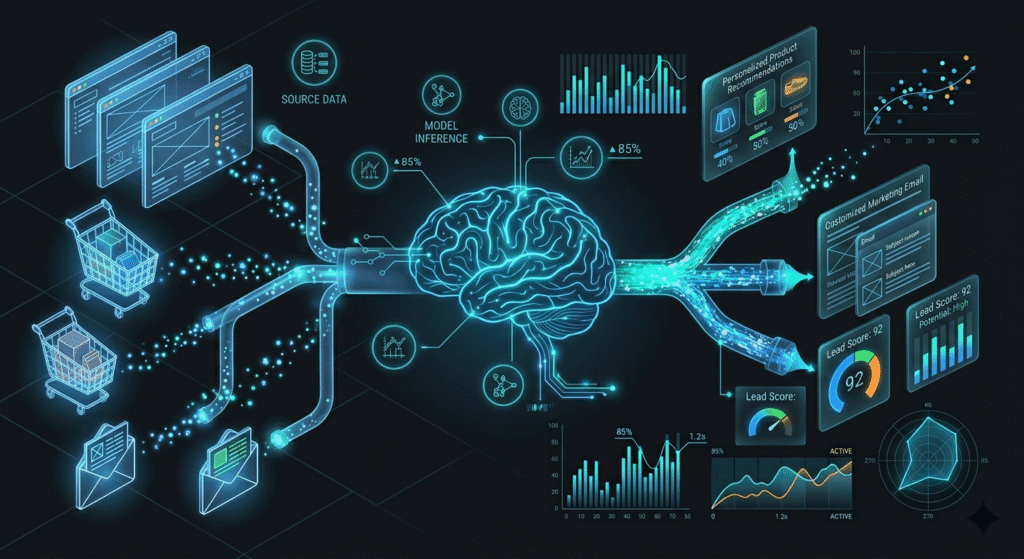
Platforms like Salesforce Marketing Cloud, HubSpot, and Adobe Experience Platform embed these capabilities, automating tasks such as lead scoring, optimizing send times, and refining personalization.
Key Features
Automation platforms AI-driven or traditional share foundational features:
Lead Scoring
Traditional lead scoring assigns points for defined actions (like email opens). It’s easy to set up, but doesn’t adapt to changing behaviors. AI lead scoring learns and improves over time, analyzing multiple data sources to detect buying intent and deliver higher-quality leads.
CRM Integration
Traditional systems pass basic contact data and history between marketing and sales. AI-enhanced CRM integration unifies customer profiles, generates predictive forecasts, and recommends next actions in real time, improving targeting and enabling smarter segmentation.
Email Automation
Traditional email automation is built on pre-set schedules and triggers—reliable but generic. AI adapts messaging, timing, and content based on recipient behavior, boosting open rates and conversions.
Process Automation and Workflow Automation
Process automation reduces repetitive manual work, speeding up marketing campaigns. Traditional workflow automation tools (Zapier, n8n, Make) automate sequential processes with rigid logic functional until business goals or behaviors shift.
AI-powered workflow automation is self-optimizing, adapting to data changes on the fly. AI can reprioritize leads, change messaging, and reassign resources automatically. Improvado reports that AI automation saves 12+ hours a week and enables campaigns to launch 75% faster.
Workflow Automation in B2B Marketing Automation
In B2B marketing automation, AI workflows automate complex multi-step campaigns and sales sequences. For example, AI can trigger targeted ads or send alerts about high-potential leads based on web activity. This scalability and instant reaction help B2B businesses convert prospects more efficiently without losing the personalized approach.
AI Marketing Automation vs Traditional Automation
| Feature/Benefit | Traditional Automation | AI Marketing Automation |
|---|---|---|
| Decision Logic | Rule-based, static | Machine learning, adaptive |
| Personalization | List/segment-based | Dynamic, 1-to-1, real-time |
| Lead Scoring | Manual, static models | Predictive, learns over time |
| CRM Integration | Basic sync | Unified customer profile, predictive insights |
| Workflow Automation | Sequential, triggered flows | Adaptive, event-driven, self-optimizing |
| Email Automation | Static schedules, fixed content | Retiming, content optimization, auto-segmentation |
| Data Requirements | Moderate, structured | Large, high-quality, real-time preferred |
| Campaign Optimization | Manual | Continuous, automated |
| Human Oversight Need | High | Medium (focus on training/QA) |
| Reliability | Very high for simple workflows | High, adaptability varies with data quality |
| Business Fit | Best for predictable, repeatable | Best for dynamic, high-volume, complex flows |
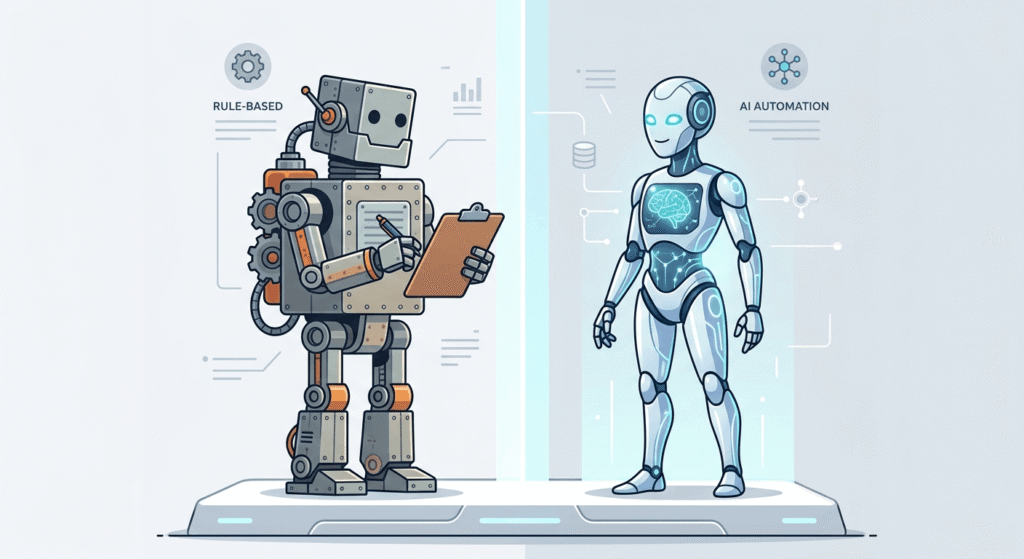
Transitioning from Traditional to AI Marketing Automation: Key Steps
- Assess Current Processes: Map out workflows and identify repetitive or bottleneck tasks.
- Evaluate Data Readiness: Clean and organize your data; AI depends on accurate, accessible information.
- Choose the Right Tools: Consider platforms like HubSpot, Salesforce, and Adobe Experience Platform for scalability and integration.
- Plan Integrations: Determine how the AI platform will connect with your CRM and other systems.
- Train Your Team: Invest in user training to ensure your team maximizes automation tools.
- Run Pilot Campaigns: Start with limited implementation to validate processes.
- Monitor Results: Track time saved, improved segmentation, and increased conversions.
- Iterate: Refine workflows and update data to continuously improve outcomes.
For more resources on automation project planning, visit MVP and Development.
Choosing the Right Solution for Your Business
Business size, goals, and data maturity shape the ideal automation approach. Small businesses might start with traditional automation for its simplicity and reliability but should consider transitioning to AI marketing automation as customer personalization grows more important.
Larger organizations, especially B2B companies with complex sales cycles, stand to benefit most from AI-driven automation unlocking predictive lead scoring, advanced segmentation, and dynamic campaign management. Hybrid strategies blending both methods often deliver the best ROI.
To decide:
- Review your marketing processes for opportunities where dynamic personalization or instant insights would provide value.
- Assess your team’s expertise and data health.
- Plan for the future: ensure your choice can scale with your business.
Explore real-world stories and ROI evidence at Our Story and the High-Converting Website for RevSquared AI.
Common Marketing Automation Mistakes
Avoid these pitfalls to maximize ROI:
- Over-automating and neglecting personal, human engagement when needed.
- Using bad data garbage in leads to garbage out.
- Failing to define clear KPIs for automation success.
- Inadequate team training on new platforms and workflows.
- Skipping pilot campaigns and rolling out automation without validation.
- Not updating workflows or retraining AI models as business needs evolve.
Clean data, clear objectives, and ongoing feedback are crucial for success. Learn more about data best practices in The Role of Data Quality in AI-Powered Marketing Automation.
AI Marketing Automation in B2B
B2B companies use both automation types to drive results. AI marketing automation is vital for account-based marketing, using predictive analytics to identify, prioritize, and nurture target accounts. AI-guided workflows deliver tailored content when engagement is likely, while crm integration provides sales teams with real-time insights for smarter follow-up.
Workflow automation ensures that leads and contacts are updated and synchronized, tasks are automatically created, and segmentation is continuously optimized all key for scaling B2B performance. See more in the Prompt Generator AI case study and the High-Converting Website for RevSquared AI.
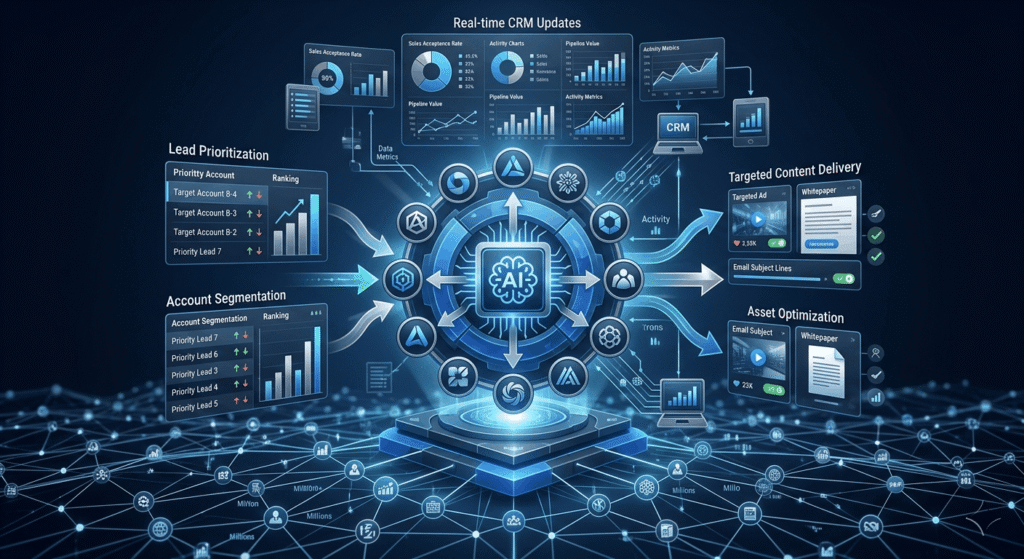
Traditional automation remains reliable for repetitive operations such as onboarding or standardized communications areas where stability is critical.
FAQs
1. What is the main difference between AI and traditional marketing automation?
AI marketing automation adapts campaigns in real time using data and machine learning, while traditional automation runs fixed workflows set by marketers.
2. Can small businesses benefit from AI marketing automation?
Yes. Many platforms are accessible and effective for segmenting audiences, timing emails, and prioritizing leads—even for small teams.
3. Is AI-based lead scoring more effective than traditional methods?
Yes, because it uncovers patterns from data that manual methods often miss, resulting in higher conversion rates.
4. How does CRM integration differ between AI and traditional systems?
Traditional CRM syncs basic contact details. AI-powered CRM integration provides dynamic insights and next-action recommendations to sales and marketing teams.
5. What are common challenges when switching to AI marketing automation?
Challenges include preparing quality datasets, integrating with legacy systems, managing costs, and training team members.
For more on small business AI tools or data needs, check our blog.
Conclusion
AI marketing automation is ideal for businesses prioritizing adaptability and personalized outreach, especially as customer expectations and data volumes rise. Traditional automation remains reliable for foundational, repeatable processes. For most organizations, a blend of both is the path to scalable, effective marketing.
Discover strategies, digital transformation, or discuss your automation needs via Home, Design, Contact Us, or view project results like High-Converting Website for RevSquared AI.